
















 Follow Us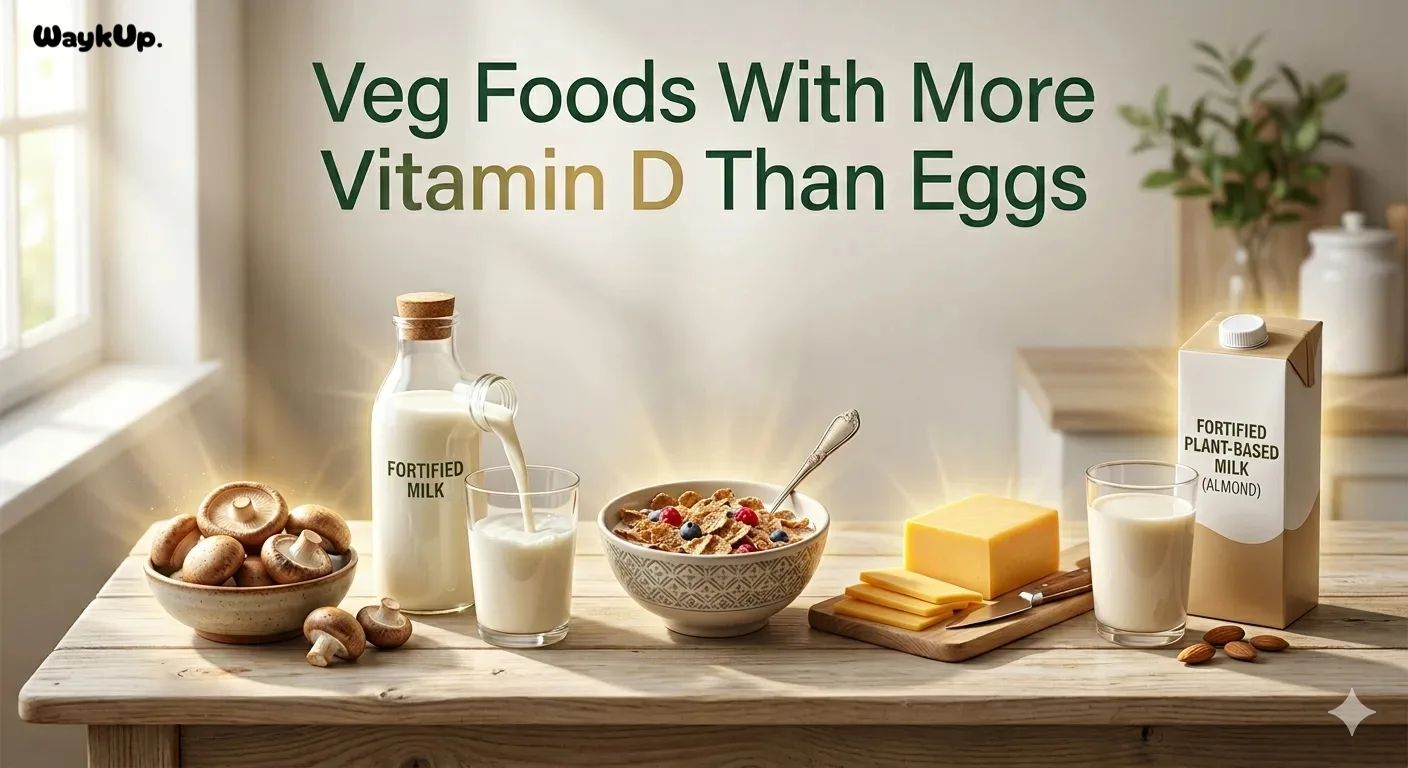
If you have been told your Vitamin D levels are low, you are not alone. In India, Vitamin D deficiency is almost an epidemic. Studies suggest that over 70% of Indians, regardless of age or lifestyle, are deficient in this nutrient. The irony is that we live in a country where sunlight is available almost year-round, and yet most of us are running low on this sunshine vitamin.
For vegetarians, the problem gets a bit more complicated. Most of the commonly recommended Vitamin D foods, fatty fish like salmon, tuna, cod liver oil, are not on the menu. Eggs are often held up as the go-to option, but here is the thing: one large egg yolk gives you somewhere between 37 to 44 IU of Vitamin D. That sounds decent until you realise that the recommended daily intake for most adults is around 600 to 800 IU. You would have to eat more eggs than is practical to bridge that gap.
So what can vegetarians actually eat? More than you might think. This article breaks down the real Vitamin D rich vegetarian foods that can genuinely help, including several that go well past what you get from eggs.
Why Vitamin D is Important for the Body
Vitamin D is not just about strong bones, though that is certainly one of its most important jobs. It helps the body absorb calcium from the food you eat. Without enough Vitamin D, even a calcium-rich diet will not do much good, the calcium simply passes through without being absorbed properly.
Beyond bones, Vitamin D plays a direct role in immune function. It helps activate the immune cells that fight off infections and may reduce the risk of autoimmune conditions. During the COVID-19 pandemic, research highlighted a connection between low Vitamin D levels and more severe outcomes, which brought this nutrient into much sharper focus across India.
There is also growing evidence linking Vitamin D to mood regulation. Low levels have been associated with depression and seasonal mood changes. Additionally, Vitamin D affects muscle function, heart health, and may reduce the risk of certain cancers. In short, this is not a nutrient you want to ignore.
Can Vegetarian Foods Provide Enough Vitamin D?
The honest answer is: it depends. Vitamin D is naturally found in very few plant-based foods. Unlike Vitamin C or iron, which are widespread in vegetables and legumes, Vitamin D does not occur in significant amounts in most things that grow from the ground.
However, the food industry has responded to this gap through fortification, the process of adding Vitamin D to foods that do not naturally contain much of it. And there is one genuinely powerful natural source: mushrooms, when exposed to UV light, can synthesise Vitamin D much like human skin does in sunlight.
So yes, vegetarians can get meaningful amounts of Vitamin D through a combination of smart food choices and sun exposure. But it requires some awareness, because not all packaged foods in India are fortified, and not all mushrooms are grown or stored the same way.
Quick Answer: Vegetarians can get adequate Vitamin D through sun-exposed mushrooms, fortified milk, fortified plant-based milks, and fortified cereals. These foods, when consumed regularly, can deliver significantly more Vitamin D per serving than a single egg, which provides only 37-44 IU.
Veg Foods With More Vitamin D Than Eggs
Here are the foods that genuinely deliver on Vitamin D, and do it better than an egg.
Sun-Exposed Mushrooms
This is the big one for vegetarians. Mushrooms are the only plant-based food that can naturally produce Vitamin D, and they do it through the same UV-light mechanism that works in human skin. When mushrooms are exposed to direct sunlight or UV light, their ergosterol content converts to Vitamin D2.
The numbers can be dramatic. Studies have shown that placing mushrooms gill-side up in direct sunlight for just 15 to 30 minutes can generate anywhere from 400 to over 800 IU of Vitamin D per 100 grams. Compare that to an egg at roughly 37 to 44 IU, and you can see why mushrooms are considered the standout veg source of Vitamin D.
The practical challenge in India is that most mushrooms sold in the market, button mushrooms from places like Himachal or Uttarakhand, are grown indoors and stored in dark conditions. They will have very little Vitamin D by default. The workaround is simple: buy fresh mushrooms, spread them on a plate or tray, and leave them in direct afternoon sunlight for 20 to 30 minutes before cooking. You do not need to do this every time, but doing it regularly makes a real difference.
Dried shiitake mushrooms, which are commonly available in cities with Japanese or Chinese grocery options, tend to have better Vitamin D content because they are often dried in sunlight during processing.
Fortified Milk
Cow’s milk is deeply embedded in the Indian diet, from the morning chai to paneer to curd. While plain milk does not have a lot of naturally occurring Vitamin D, fortified variants can be a reliable daily source.
Fortified milk in India typically provides around 100 to 150 IU of Vitamin D per 240 ml serving. If you are drinking two glasses a day, that is already 200 to 300 IU, significantly more than what you would get from two eggs.
Brands like Amul and Mother Dairy have introduced Vitamin D-fortified milk variants in recent years. When buying packaged milk, look at the label. The fortification details are usually listed under the nutritional information panel. If the pack just says ‘milk’ without any mention of added vitamins, assume it is not fortified.
One important note: Vitamin D is fat-soluble, meaning it is better absorbed when there is some fat in the meal. Drinking fortified milk with your regular meals rather than standalone will improve absorption.
Fortified Breakfast Cereals
This one might surprise you, but many packaged breakfast cereals sold in India are fortified with a range of micronutrients, including Vitamin D. Products from brands like Kellogg’s, Nestle, and Quaker often list Vitamin D on their label.
A typical 30 to 40 gram serving of fortified cereal can deliver between 40 to 100 IU of Vitamin D. That alone is comparable to an egg, and when combined with fortified milk, your breakfast can easily provide 200 to 250 IU in one go.
The catch is that not every cereal in the Indian market is fortified, and even among fortified ones, the quantity varies. Check the micronutrient table on the back of the box specifically for Vitamin D or Cholecalciferol (D3) or Ergocalciferol (D2). If neither is listed, the cereal is likely not a useful source.
Fortified Cheese
Cheese is not typically a major source of Vitamin D, but certain processed and fortified cheese products available in India do contain added Vitamin D. Amul processed cheese slices, for instance, are fortified with Vitamin D, providing a small but consistent dose with each serving.
A single processed cheese slice typically provides around 40 to 60 IU of Vitamin D. That is roughly on par with an egg, but the advantage is that cheese is easy to incorporate into everyday meals, a slice in a sandwich, melted into a paratha filling, or added to pasta.
Natural cheese, including the homemade paneer most Indian families make, does not contain meaningful amounts of Vitamin D unless the milk used was fortified. This is worth keeping in mind if you are specifically eating dairy for Vitamin D intake.
Fortified Plant-Based Milk
Soy milk, almond milk, and oat milk have become increasingly available in Indian cities, and many of the branded versions are fortified with Vitamin D. This makes them particularly useful for vegans and those who are lactose intolerant.
A 240 ml serving of fortified soy milk can provide 100 to 120 IU of Vitamin D, which is comparable to fortified cow’s milk and considerably more than an egg. Brands like So Good and Raw Pressery sell Vitamin D-fortified soy and almond milk variants in Indian cities.
Always check the label before buying, as not all plant-based milks are fortified. The ones marketed specifically as ‘complete nutrition’ or ‘enriched’ variants are more likely to have added micronutrients including Vitamin D.
Tips to Improve Vitamin D Absorption Naturally
Eating the right foods is only part of the equation. How well your body absorbs Vitamin D matters just as much. A few practical steps can significantly improve absorption:
- Pair Vitamin D foods with healthy fats. Since Vitamin D is fat-soluble, eating it alongside a source of fat, even a small amount of ghee, oil, or nuts, helps the body absorb it much better.
- Get morning or afternoon sun. Exposing your arms or legs to direct sunlight between 11 AM and 2 PM for 15 to 30 minutes can help your skin produce Vitamin D. Indian skin tones generally produce Vitamin D efficiently in sunlight, though this varies by season and geography.
- Check your magnesium levels. Magnesium is required to activate Vitamin D in the body. If you are magnesium-deficient, Vitamin D supplements or dietary Vitamin D may not work as effectively. Green leafy vegetables, seeds, and nuts are good magnesium sources.
- Avoid excessive sunscreen during your sun exposure window. Sunscreen with SPF 30 or above can block up to 95% of Vitamin D synthesis. For your short daily sun window, consider going without it on areas like forearms or lower legs.
- Maintain a healthy gut. Conditions like IBS, Crohn’s disease, or general poor gut health can reduce how much Vitamin D is absorbed from food. If you have chronic digestive issues, getting a proper gut checkup is worth it.
Signs of Vitamin D Deficiency
Vitamin D deficiency does not always announce itself loudly. Many people live with it for years without knowing. Some of the more common signs to watch for include:
- Persistent fatigue that does not improve with sleep or rest
- Bone pain, especially in the lower back, hips, or legs
- Muscle weakness or cramps, particularly in the legs
- Getting sick frequently or taking longer than usual to recover from infections
- Low mood, irritability, or symptoms of depression
- Hair loss beyond normal shedding
- Wounds that take longer to heal
If you are experiencing several of these symptoms, a simple blood test, specifically a 25-hydroxyvitamin D test, will tell you exactly where you stand. Normal levels are generally considered to be above 30 ng/mL, though optimal levels for many people sit between 40 and 60 ng/mL.
In India, because deficiency is so widespread, it is a good idea to get this tested at least once a year, especially if you work indoors and follow a primarily vegetarian diet.
Conclusion
Being vegetarian in India does not mean you have to resign yourself to low Vitamin D levels. The options are more practical than they might seem. Sun-exposed mushrooms are the most powerful natural tool you have. Fortified milk, cereals, cheese, and plant-based milks can fill in the rest of your daily requirement when used consistently.
Eggs have their place, but they are not the ceiling when it comes to Vitamin D rich vegetarian foods. With the right combination of food choices, a bit of daily sun, and attention to absorption, vegetarians can absolutely maintain healthy Vitamin D levels without relying on supplements.
Start by reading labels more carefully, place your mushrooms in the sun before cooking, and consider getting a Vitamin D test if you have not done one recently. Small, consistent changes work far better than any crash fix, and your bones, muscles, and immune system will feel the difference.
Frequently Asked Questions (FAQs)
Which vegetarian food has the highest Vitamin D?
Sun-exposed mushrooms are the highest natural vegetarian source of Vitamin D. When placed in direct sunlight for 20 to 30 minutes, they can generate 400 to 800 IU per 100 grams, far more than any other vegetarian food and significantly higher than eggs. This makes them the most effective veg source of Vitamin D available in India.
Can vegetarians get enough Vitamin D without supplements?
Yes, but it requires a combination of approaches. Regular consumption of fortified milk, fortified cereals, and sun-exposed mushrooms, along with daily sunlight exposure for 15 to 30 minutes, can meet the daily requirement of 600 to 800 IU for most healthy adults. Supplementation becomes necessary mainly when blood levels are clinically low or sun exposure is very limited.
Is fortified milk a good source of Vitamin D in India?
Yes, when you choose the right variant. Fortified cow’s milk brands like Amul and Mother Dairy offer Vitamin D-enriched options that provide around 100 to 150 IU per serving. Two glasses a day can contribute 200 to 300 IU, making it a reliable and convenient source for Indian vegetarians who already consume dairy regularly.
How can I increase Vitamin D naturally?
The most effective natural methods are sunlight exposure and food choices. Spend 15 to 30 minutes in direct sunlight between 11 AM and 2 PM with your arms or legs exposed. Eat sun-exposed mushrooms regularly, choose fortified dairy and cereal products, and pair Vitamin D-rich foods with healthy fats to improve absorption.
Are mushrooms really high in Vitamin D?
Only when exposed to UV light. Commercially grown mushrooms raised indoors have very little Vitamin D. However, placing fresh mushrooms in direct sunlight for just 20 to 30 minutes activates their Vitamin D production. This simple step can turn an ordinary ingredient into one of the best foods higher in Vitamin D than eggs available to vegetarians.
What is the daily Vitamin D requirement for Indians?
The Indian Council of Medical Research (ICMR) recommends 600 IU per day for most adults under 70, and 800 IU for those above 70. For people with confirmed deficiency, doctors often recommend higher doses temporarily. Regular testing is the most reliable way to know whether your current intake and lifestyle are meeting your actual needs.
Do fortified plant-based milks contain enough Vitamin D?
Fortified soy and almond milks can provide 100 to 120 IU per 240 ml serving, which is comparable to fortified cow’s milk and better than eggs. They are a good option for vegans or those who are lactose intolerant. Always check the label, as not every plant-based milk brand sold in India is fortified with Vitamin D.