















 Follow Us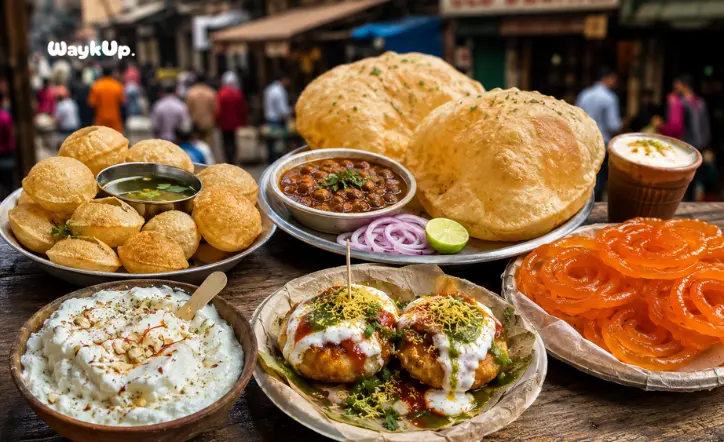
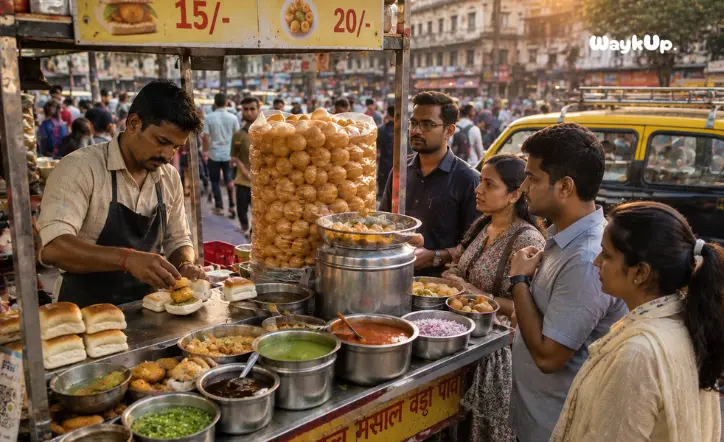
Delhi is not just India’s capital. It is the country’s undisputed street food capital, a city where every lane has a story and every bite has a history. From the narrow galis of Chandni Chowk to the busy markets of Lajpat Nagar, Delhi’s street food scene is an experience that no food lover should leave the city without having.
Whether you are a first-time visitor or a Delhiite who has lived here for years, these 10 dishes are the ones that define what Delhi’s street food is all about. They are iconic, they are delicious, and every single one of them is worth the queue.
For more travel, food, and lifestyle content from across India, visit the WaykUp Entertainment and Lifestyle section.
The 10 Must-Try Street Foods in Delhi
1. Chole Bhature
No Delhi street food list starts anywhere else. Chole bhature is the city’s most beloved breakfast and brunch dish: fluffy, deep-fried bhature paired with a deeply spiced, tangy chickpea curry. Sita Ram Diwan Chand in Paharganj has been serving one of Delhi’s most celebrated versions since 1947.
Where to eat: Sita Ram Diwan Chand (Paharganj), Chache Di Hatti (Kamla Nagar)
2. Aloo Tikki
Crispy on the outside, soft and spiced on the inside, Delhi’s aloo tikki is topped with chole, green and tamarind chutneys, yoghurt, and sev. It is the kind of food that hits every flavour note at once. The variations at Bengali Sweet House in Connaught Place and at Old Delhi vendors are both worth trying.
Where to eat: Bengali Sweet House (CP), Pandara Road, Old Delhi markets
3. Dahi Bhalle
Soft lentil dumplings soaked in cool, silky yoghurt and finished with sweet tamarind chutney, mint chutney, and a generous dusting of chaat masala. Dahi bhalle is the perfect balance of textures and temperatures, and Delhi’s versions set the standard for the dish across the country.
Where to eat: Natraj Dahi Bhalle Wala (Chandni Chowk), Bengali Sweet House
4. Paranthe Wali Gali
An entire lane in Chandni Chowk devoted to paranthas. The gali has been open since the 1870s and serves stuffed paranthas with fillings ranging from aloo and methi to rabri and khoya, all served with accompanying chutneys, achaar, and sabzi. It is one of the most unique food experiences Delhi offers.
Where to eat: Paranthe Wali Gali, Chandni Chowk (multiple shops, all worth trying)
5. Jalebi and Rabri
Fresh, hot jalebi poured straight from the kadai and served with chilled, thickened rabri is one of Delhi’s most indulgent treats. The contrast between the crispy, syrupy jalebi and the cool, creamy rabri is unforgettable. Old Famous Jalebi Wala at Dariba Kalan has been a Chandni Chowk institution since 1884.
Where to eat: Old Famous Jalebi Wala, Chandni Chowk
6. Kebabs from Jama Masjid
The lanes around Jama Masjid are home to some of Delhi’s finest kebab vendors. Seekh kebabs, kakori kebabs, and shami kebabs rolled in roomali roti with onions and green chutney are the city’s most fragrant street food experience. Al Jawahar and Karim’s nearby are both legends of the trade.
Where to eat: Al Jawahar, Karim’s (both near Jama Masjid)
7. Gol Gappe (Pani Puri)
Delhi’s gol gappe are distinctive. The puri here is slightly harder and crispier than in other cities, and the jal jeera water is bracingly tangy and spiced. You eat them fast, one after another, and the experience is as much about the rhythm and the roadside community as it is about the taste.
Where to eat: Anywhere in Lajpat Nagar, Sarojini Nagar, or Chandni Chowk
8. Kachori Sabzi
Delhi’s kachori is a deep-fried, spiced dough shell stuffed with moong dal or urad dal and served with aloo sabzi and chutneys. It is a satisfying, filling snack that is as much a part of Delhi’s food identity as anything else on this list. The Kachori wala at Lal Darwaza in Old Delhi draws queues every morning.
Where to eat: Lal Darwaza area, Old Delhi; also widely available at Chandni Chowk
9. Kulfi Faluda
Dense, creamy kulfi made from reduced milk and flavoured with pista, saffron, or rose, served over soft faluda noodles and topped with rose syrup and basil seeds. Roshan di Kulfi in Karol Bagh has been serving one of Delhi’s most celebrated versions for over 90 years.
Where to eat: Roshan di Kulfi (Karol Bagh), Old Delhi vendors
10. Daulat ki Chaat
This is Delhi’s most seasonal and most magical street food, available only in winter from roughly November to February. Daulat ki chaat is made from milk that is whipped overnight using morning dew, resulting in an impossibly light, foam-like dessert topped with saffron, khoya, and powdered sugar. It dissolves the moment it touches your tongue. No other city in India makes it like Delhi.
Where to eat: Chandni Chowk near Fatehpuri Mosque, Old Delhi lanes on winter mornings
Tips for Exploring Delhi Street Food
- Go early: Most legendary spots sell out before noon. For Daulat ki Chaat and jalebi, early morning is essential
- Go hungry: Delhi’s portions are generous and the temptation to try one more thing is constant
- Cash is king: Many street vendors do not accept UPI or cards. Keep small notes handy
- Trust the crowd: A long queue is almost always a reliable sign of quality in Delhi
- Monsoon caution: July to September is monsoon season. Choose hygiene-conscious vendors during this period
Final Thoughts
Delhi’s street food is not just about eating. It is about experiencing a city that has fed travellers, traders, and emperors for centuries. Each of these 10 dishes carries a history, a location, and a community around it. Whether you have one afternoon in Old Delhi or a full week to explore, let the food lead the way.
Frequently Asked Questions (FAQ)
Q1. What is the most famous street food in Delhi?
Chole bhature is widely considered Delhi’s most iconic street food, closely followed by aloo tikki chaat, gol gappe, and the paranthas of Paranthe Wali Gali in Chandni Chowk.
Q2. Where is the best place to eat street food in Delhi?
Chandni Chowk in Old Delhi is the undisputed street food capital of the city, home to Paranthe Wali Gali, Natraj Dahi Bhalle, Old Famous Jalebi Wala, and dozens of other iconic vendors.
Q3. What is Daulat ki Chaat and when is it available?
Daulat ki Chaat is a unique Delhi winter dessert made from whipped milk foam, saffron, and khoya. It is available only from November to February in Old Delhi near Fatehpuri Mosque.
Q4. Is Delhi street food safe to eat?
Yes, when chosen carefully. Stick to busy, well-established vendors with visible cooking practices, avoid cut fruits in peak summer, and during monsoon opt for cooked, piping hot food.
Q5. What is the best time to visit Delhi for street food?
October to March is ideal. The weather is pleasant, Daulat ki Chaat is available in winter, and outdoor eating along Delhi’s food lanes is far more comfortable than in peak summer heat.