

















 Follow Us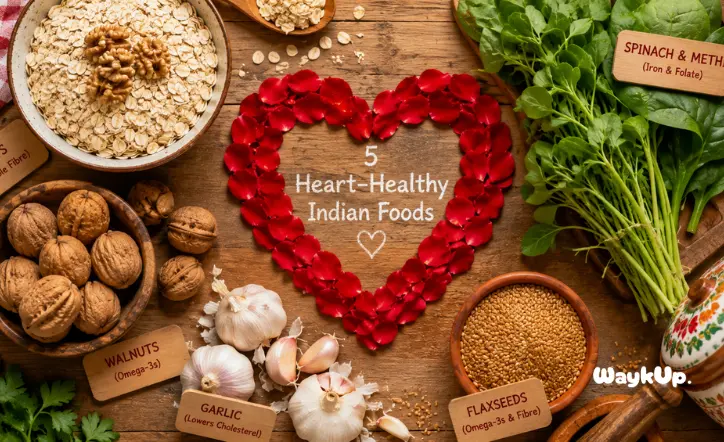
Heart disease is the leading cause of death in India, accounting for more than one in four deaths across the country. What makes this particularly sobering is that a significant proportion of these deaths are preventable through lifestyle changes, and the most powerful lifestyle change of all is what you eat every single day.
The good news is that eating for a healthy heart does not require expensive supplements, complicated meal plans, or giving up the foods you love. Some of the most effective heart-protective foods are already sitting in your kitchen. They are affordable, accessible, and deeply embedded in Indian cooking traditions. You just need to know which ones to prioritise and why.
This guide covers the top 5 heart-healthy foods that nutrition research consistently supports, with practical advice on how to include each one in your daily routine.
For more evidence-based health content tailored to Indian readers, explore the Health and Fitness section on WaykUp.
Why Your Daily Diet Is the Most Powerful Tool for Heart Health
Your heart is a muscle that works every single second of your life. What you eat directly affects the quality of the blood it pumps, the health of the arteries it pushes blood through, and the levels of cholesterol, triglycerides, and inflammation that either protect or damage cardiovascular function over time.
Multiple decades of research confirm that diets high in processed foods, refined carbohydrates, trans fats, and excess salt accelerate cardiovascular disease. Diets built around whole grains, healthy fats, leafy vegetables, and plant-based proteins do the opposite: they reduce inflammation, lower bad cholesterol, improve blood pressure, and significantly reduce the risk of heart attacks and strokes.
The five foods below are not superfoods in the trendy sense. They are genuinely, consistently, and extensively researched foods with specific mechanisms that protect the heart. Add them to your daily routine and you are making a real investment in how long and how well your heart works.
Quick Reference: The 5 Heart-Healthy Foods at a Glance
|
Food |
Key Nutrient |
Heart Benefit |
Daily Serve |
|---|---|---|---|
|
Oats |
Beta-glucan fibre |
Lowers LDL cholesterol |
1 bowl (40g) |
|
Walnuts |
Omega-3 fatty acids |
Reduces inflammation |
4 to 5 pieces |
|
Garlic |
Allicin |
Lowers blood pressure |
1 to 2 cloves |
|
Leafy Greens |
Vitamin K, nitrates |
Improves arterial function |
1 cup cooked |
|
Flaxseeds |
ALA omega-3, lignans |
Reduces triglycerides |
1 tbsp ground |
The Top 5 Heart-Healthy Foods
Food 1: Oats
The cholesterol-lowering breakfast that has stood the test of nutritional science
Key Nutrients: Beta-glucan soluble fibre, B vitamins, magnesium, iron, antioxidants (avenanthramides)
Heart Benefit: Reduces LDL (bad) cholesterol, improves blood sugar control, reduces arterial inflammation
Oats are one of the most thoroughly researched heart-protective foods on the planet. Their primary active ingredient is beta-glucan, a form of soluble fibre that forms a gel in the digestive tract and binds to cholesterol particles, preventing them from being absorbed into the bloodstream. The result is a measurable reduction in LDL (bad) cholesterol, which is one of the primary drivers of arterial plaque and heart disease.
Multiple clinical studies have shown that eating just 3 grams of beta-glucan per day, roughly the amount in a standard bowl of oatmeal, can lower LDL cholesterol by 5 to 10 percent. Over years of consistent consumption, this difference is clinically significant. The US FDA recognised oats as one of the first foods permitted to carry a heart health claim on its packaging, and the science behind that claim has only grown stronger since.
Oats are also rich in avenanthramides, antioxidants unique to oats that reduce inflammation in the arteries. They help maintain healthy blood pressure by improving the production of nitric oxide, which relaxes blood vessels and improves blood flow.
How to Eat Oats Daily
- A bowl of plain rolled oats cooked with water or milk, topped with a banana, some nuts, and a teaspoon of honey is an ideal daily breakfast
- Add oats to your dosa batter or mix into atta for rotis to increase fibre without changing the taste significantly
- Make overnight oats the evening before for a zero-effort, heart-healthy morning meal
- Oat-based chilla or savory oatmeal with vegetables works well as a light dinner option
- Daily recommended amount: approximately 40 grams (one bowl) of dry rolled oats
Food 2: Walnuts
The only nut with a meaningful amount of plant-based omega-3 fatty acids
Key Nutrients: Alpha-linolenic acid (ALA omega-3), polyphenols, vitamin E, magnesium, L-arginine
Heart Benefit: Reduces LDL cholesterol, lowers triglycerides, reduces arterial inflammation, improves blood vessel function
Walnuts look like a brain for a reason. They are extraordinarily good for every organ that relies on healthy blood flow, and the heart tops that list. Unlike most nuts, which are high in monounsaturated fats, walnuts are the only nut that contains a significant amount of alpha-linolenic acid (ALA), the plant-based form of omega-3 fatty acids.
Omega-3 fatty acids are well established in cardiovascular research for their ability to reduce inflammation throughout the body, lower triglyceride levels in the blood, and prevent the formation of dangerous blood clots. A large body of evidence, including a landmark study from the New England Journal of Medicine, has shown that regular nut consumption, particularly walnuts, is associated with significantly lower rates of heart disease and death from cardiac events.
Walnuts are also rich in L-arginine, an amino acid that the body converts into nitric oxide. Nitric oxide relaxes and dilates blood vessels, which reduces blood pressure and makes the heart’s job considerably easier. The antioxidant polyphenols in walnuts additionally protect LDL cholesterol from oxidation, a process that makes bad cholesterol more likely to stick to artery walls.
How to Eat Walnuts Daily
- Four to five walnut halves per day is the widely recommended amount for heart protection
- Add roughly chopped walnuts to your morning porridge, yoghurt, or fruit bowl
- Keep a small container of walnuts at your desk for a mid-morning or afternoon snack instead of biscuits or namkeen
- Add to salads, raita, or a handful of trail mix with dried fruit and seeds
- Walnuts are calorie-dense, so a small handful is all you need. More is not necessarily better
Food 3: Garlic
The ancient Indian kitchen staple with genuinely powerful cardiovascular benefits
Key Nutrients: Allicin, alliin, quercetin, vitamin C, selenium, manganese
Heart Benefit: Lowers blood pressure, reduces LDL cholesterol, prevents blood clot formation, reduces arterial stiffness
Garlic has been used in Indian cooking and Ayurvedic medicine for thousands of years, and modern science has progressively validated what traditional practitioners understood intuitively. The active compound in garlic is allicin, produced when a garlic clove is crushed or chopped. Allicin is responsible for most of garlic’s cardiovascular effects.
A comprehensive review of clinical trials published in the Journal of Nutrition found that garlic supplementation consistently reduced systolic blood pressure by an average of 8 to 10 mmHg in people with high blood pressure, which is comparable to the effect of some blood pressure medications. This reduction matters enormously in a country where hypertension is estimated to affect over 200 million Indians and is one of the leading risk factors for stroke and heart attack.
Garlic also inhibits platelet aggregation, which is the tendency of platelets in the blood to clump together and form dangerous clots. It mildly reduces total and LDL cholesterol while leaving HDL (good) cholesterol unaffected. And it reduces the oxidative stress that damages arterial walls over time. Regular garlic consumption is one of the simplest, most accessible, and most Indian-kitchen-friendly heart-protective habits available.
How to Eat Garlic Daily
- Use 1 to 2 fresh crushed or minced garlic cloves per day in your cooking
- Crush or chop garlic and let it sit for 5 to 10 minutes before cooking. This activates allicin and preserves more of its benefits even when heated
- Add raw garlic to your salad dressings, chutneys, or raita for maximum allicin content
- Tadka with garlic in dal or sabzi counts. The key is including it in your daily cooking, not just occasionally
- Avoid over-frying garlic to the point of burning, which destroys allicin and reduces its cardiovascular benefit
Food 4: Leafy Green Vegetables
Spinach, methi, palak, sarson, and moringa: your heart’s best friends in the vegetable aisle
Key Nutrients: Vitamin K, dietary nitrates, folate, potassium, magnesium, fibre, antioxidants
Heart Benefit: Lowers blood pressure, reduces arterial stiffness, protects blood vessel lining, reduces homocysteine levels
Leafy green vegetables are among the most nutrient-dense foods that exist, and their cardiovascular benefits are both numerous and well-documented. Spinach (palak), fenugreek leaves (methi), mustard greens (sarson da saag), amaranth (chaulai), and drumstick leaves (moringa) are all available in Indian markets and are powerful tools for heart health when eaten regularly.
The two most important heart-protective properties of leafy greens are their Vitamin K content and their dietary nitrates. Vitamin K is essential for regulating calcium deposition in arteries. When Vitamin K intake is consistently low, calcium builds up in arterial walls, making them stiff and significantly increasing the risk of cardiovascular disease. Adequate Vitamin K intake, easily achievable through daily leafy greens, helps keep arteries flexible and functional.
Dietary nitrates, found in particularly high concentrations in spinach and other dark green leaves, are converted by the body into nitric oxide, the same molecule that walnuts and garlic stimulate. Nitric oxide relaxes and dilates blood vessels, reducing blood pressure and improving circulation throughout the cardiovascular system.
A large meta-analysis published in the International Journal of Epidemiology found that people who ate one additional serving of leafy greens per day had an 11 percent lower risk of cardiovascular disease. In the context of Indian cooking, where leafy greens can be incorporated into dal, sabzi, roti, paratha, smoothies, and rice dishes with very little effort, this is an extraordinarily achievable target.
How to Eat Leafy Greens Daily
- Aim for at least one cooked cup of leafy greens per day, which shrinks significantly from its raw volume
- Palak dal, methi paratha, sarson ka saag, and moringa chutney are all traditional Indian preparations that make daily intake effortless
- Add a handful of fresh spinach to dal or curry just before serving. It wilts in seconds and adds nutrition without changing the flavour significantly
- Blend a small handful of spinach or moringa powder into a morning smoothie with banana, milk, and cardamom
- Vary your greens across the week. Each variety offers a slightly different nutrient profile
Food 5: Flaxseeds (Alsi)
A tiny Indian kitchen staple packed with the most plant-based omega-3 of any seed
Key Nutrients: ALA omega-3 fatty acids, lignans, soluble fibre, magnesium, thiamine
Heart Benefit: Reduces triglycerides, lowers blood pressure, reduces arterial inflammation, improves blood vessel elasticity
Flaxseeds, known as alsi in Hindi, have been cultivated in India for thousands of years and are among the richest plant-based sources of omega-3 fatty acids available. One tablespoon of ground flaxseeds provides approximately 1.8 grams of ALA omega-3, more than enough to meet daily requirements for this essential fatty acid.
Beyond their omega-3 content, flaxseeds are exceptional for heart health because of their lignan content. Lignans are plant compounds with both antioxidant and oestrogen-like properties. Research has found that lignan intake is associated with reduced arterial plaque formation, lower rates of cardiovascular disease, and better blood lipid profiles. Flaxseeds contain up to 800 times more lignans than any other plant food.
The soluble fibre in flaxseeds works similarly to oats in lowering LDL cholesterol by binding to cholesterol in the digestive system and removing it before absorption. Multiple clinical trials have confirmed that daily flaxseed consumption reduces total cholesterol by 6 to 11 percent and LDL cholesterol by 9 to 18 percent in people with elevated cholesterol levels.
How to Eat Flaxseeds Daily
- Always use ground flaxseeds rather than whole ones. Whole flaxseeds pass through the digestive system largely intact, meaning you absorb far fewer of their nutrients
- One tablespoon of ground flaxseeds daily is the recommended amount for cardiovascular benefit
- Add ground alsi to your morning atta, mix into curd, sprinkle over poha, or stir into dal or soup
- Store ground flaxseeds in an airtight container in the refrigerator to prevent the oils from going rancid. Use within two weeks of grinding
- Roasted whole flaxseeds (alsi ki chutney) are a traditional preparation in several Indian states and a delicious way to include them in the diet
How to Build These 5 Foods Into Your Daily Indian Diet
The most common barrier to eating heart-healthy food is not knowledge. It is habit. Here is a simple daily framework that incorporates all five foods without disrupting your existing cooking routine:
- Morning: A bowl of oats cooked with milk, topped with 4 to 5 walnuts and a teaspoon of ground flaxseeds
- Lunch: Dal or sabzi cooked with 1 to 2 crushed garlic cloves in the tadka, served with a side of palak or methi ki sabzi
- Evening snack: A small handful of walnuts or a piece of fruit with a tablespoon of flaxseed chutney
- Dinner: Methi dal, sarson ka saag with makki ki roti, or palak paneer. Add raw garlic to raita or chutney on the side
This framework requires no exotic ingredients, no dramatic changes to your cooking, and no expensive supplements. Everything on this list is available at your local kirana store or vegetable market.
What to Limit Alongside These Heart-Healthy Foods
Adding heart-protective foods to your diet is important. But if those foods are surrounded by large quantities of refined oil, white bread, sugary chai, packaged snacks, and red meat, their benefits will be significantly blunted. Eating well for your heart is about the overall pattern of your diet, not individual foods in isolation.
- Limit refined oils and replace with small amounts of cold-pressed mustard oil, groundnut oil, or ghee used sparingly
- Reduce salt intake, particularly hidden salt in pickles, papad, packaged snacks, and restaurant food
- Limit maida (refined flour) and switch to whole wheat, jowar, bajra, or ragi wherever possible
- Cut down on fried foods and reduce the frequency of deep-frying at home
- Watch sugar intake, particularly in chai, cold drinks, mithai, and biscuits
For more content on practical nutrition, fitness habits, and wellness for Indian lifestyles, the Health and Fitness section on WaykUp has a wide range of articles covering everything from managing specific health conditions to building sustainable daily wellness routines.
Final Thoughts: Small Daily Choices, Big Long-Term Impact
Heart disease does not develop overnight, and it does not reverse overnight either. But the research is clear and consistent: what you eat every day across years and decades is one of the most powerful determinants of whether your heart remains strong and functional well into old age.
You do not need to overhaul your entire lifestyle to start protecting your heart. Start with one of the five foods on this list. Add a bowl of oats to your morning routine this week. Crush a clove of garlic into your dal tonight. Keep a handful of walnuts on your desk tomorrow.
Small, consistent changes compound into significant protection over time. Your heart is already working hard for you. The least you can do is work a little harder for it in return.
Frequently Asked Questions (FAQ)
Q1. What is the best food for heart health in India?
Several foods are strongly supported by research for heart health and are readily available in India. Oats, walnuts, garlic, leafy green vegetables like spinach and methi, and flaxseeds (alsi) are among the most well-documented. Including all five regularly in your diet provides comprehensive protection through different mechanisms, including cholesterol reduction, blood pressure management, and arterial inflammation control.
Q2. How much garlic should I eat daily for heart health?
One to two fresh garlic cloves per day is the amount most consistently associated with cardiovascular benefits in clinical research. Crushing or chopping garlic and letting it rest for 5 to 10 minutes before cooking maximises the formation of allicin, the primary heart-protective compound. Garlic supplements are available but whole fresh garlic used in daily cooking is the most practical and culturally appropriate option for most Indian households.
Q3. Are oats good for the heart?
Yes. Oats are one of the most extensively researched heart-protective foods available. The beta-glucan soluble fibre in oats consistently reduces LDL (bad) cholesterol when consumed in amounts of at least 3 grams per day, which is roughly equivalent to one standard bowl of cooked oatmeal. Oats also contain antioxidants called avenanthramides that reduce arterial inflammation and improve blood vessel function.
Q4. Can eating walnuts every day improve heart health?
Yes. A daily intake of four to five walnut halves is associated in multiple large studies with reduced LDL cholesterol, lower triglycerides, reduced arterial inflammation, and improved blood vessel function. Walnuts are the only nut with significant plant-based omega-3 content and are also rich in L-arginine, which helps produce nitric oxide to relax and dilate blood vessels.
Q5. What leafy greens are best for heart health in India?
Spinach (palak), fenugreek leaves (methi), mustard greens (sarson), amaranth leaves (chaulai), and drumstick leaves (moringa) are all excellent choices that are widely available in Indian markets. These greens are high in Vitamin K, dietary nitrates, folate, and potassium, which collectively support healthy blood pressure, arterial flexibility, and overall cardiovascular function.
Q6. How do flaxseeds benefit the heart?
Flaxseeds (alsi) contain alpha-linolenic acid (ALA), the plant-based form of omega-3 fatty acids, along with lignans and soluble fibre. Together, these components reduce triglyceride levels, lower LDL cholesterol, reduce arterial inflammation, and improve blood vessel elasticity. One tablespoon of ground flaxseeds per day is the recommended amount. Ground flaxseeds are significantly more bioavailable than whole ones, so grinding before use is important.
Q7. Can these foods replace heart medication?
No. Heart-healthy foods are a powerful complement to medical treatment but should not replace prescribed medication, particularly for people who have already been diagnosed with heart disease, high blood pressure, or high cholesterol. Always consult your doctor before making significant dietary changes if you are on medication for a cardiovascular condition. These foods work best as prevention and as part of a broader healthy lifestyle.
Q8. How quickly do heart-healthy foods show results?
Some effects are measurable within weeks. Clinical studies show LDL cholesterol reductions from oats and flaxseeds within 4 to 8 weeks of consistent daily consumption. Blood pressure improvements from garlic and leafy greens can also be observed within weeks. However, the most significant cardiovascular benefits, including reduced risk of heart attack and stroke, accumulate over months and years of consistent healthy eating rather than days or weeks.