
















 Follow Us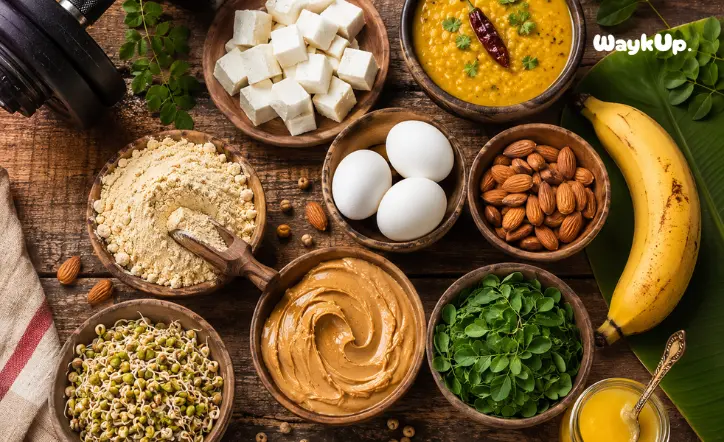
You do not need expensive protein powders or imported superfoods to build a strong, muscular body. India has always had some of the most powerful muscle-building foods right in its kitchens, dhabas, and local markets. From your dadi’s kitchen staples to everyday bazaar finds, these desi superfoods pack serious nutritional punch, and most of them cost a fraction of what you spend on supplements.
Whether you are hitting the gym daily, playing sports, or just trying to get stronger and leaner, adding these foods to your diet can make a real difference. Head over to the Health & Fitness section on WaykUp for more practical tips on eating and training smarter.
Let us break down the 10 best desi superfoods that genuinely help in muscle building.
Why Desi Superfoods Work for Muscle Building
Muscle growth happens when your body has enough protein to repair and rebuild muscle fibres after exercise. But protein alone is not enough. You also need the right carbohydrates for energy, healthy fats for hormone production, and micronutrients like zinc, iron, magnesium, and vitamins to support recovery.
The good news? Traditional Indian foods naturally contain all of these. They are also easier to digest, more affordable, and far more suited to our body types and climate than many foreign alternatives.
10 Desi Superfoods That Help Build Muscles
1. Paneer (Cottage Cheese)
Paneer is one of the richest plant-based protein sources available in India. A 100-gram serving delivers around 18 to 25 grams of protein, depending on the fat content. It contains casein protein, which digests slowly and keeps feeding your muscles with amino acids over several hours, making it especially great before bed.
Paneer is also high in calcium, which supports bone density alongside muscle function. Toss it in a bhurji, grill it with spices, or eat it raw with some chaat masala. It is one of the most versatile muscle-building foods in an Indian diet.
- Best time to eat: Before bed or as a post-workout meal
- Protein per 100g: 18 to 25 grams
2. Moong Dal (Green Gram Lentils)
Dal is not just comfort food, it is one of the best plant-based protein sources in the world. Moong dal specifically is easy to digest, light on the stomach, and contains around 24 grams of protein per 100 grams in dry form. It also provides complex carbohydrates that give you sustained energy for workouts.
Sprouted moong takes things up a notch. When you sprout moong, the protein bioavailability increases, meaning your body can absorb it more efficiently. A bowl of sprouted moong chaat as a post-workout snack is both effective and delicious.
- Best time to eat: Lunch, dinner, or post-workout as sprouts
- Protein per 100g (dry): Around 24 grams
3. Ande (Eggs)
Eggs are one of nature’s most complete protein sources, containing all nine essential amino acids. The biological value of egg protein is nearly 100, meaning your body can use almost all of it efficiently. Two whole eggs give you about 12 grams of protein, plus healthy fats, vitamin D, B12, and choline.
For muscle building, do not skip the yolk. While egg whites are popular, the yolk contains healthy fats and vitamins that support testosterone production and overall recovery.
- Best time to eat: Breakfast or pre-workout
- Protein per 2 eggs: 12 to 14 grams
4. Sattu (Roasted Gram Flour)
Sattu is Bihar’s answer to protein powder, and it has been fuelling labourers, wrestlers, and athletes across northern India for generations. Made from roasted Bengal gram (chana), sattu contains around 20 to 22 grams of protein per 100 grams.
It is also rich in fibre, iron, and minerals. Mix it with water and a pinch of kala namak for a quick pre-workout drink, or make sattu parathas for a filling, high-protein meal. It is one of the most underrated muscle foods available in India.
- Best time to eat: Morning or pre-workout as a drink
- Protein per 100g: 20 to 22 grams
5. Moongfali / Peanut Butter (Groundnuts)
Peanuts are a powerhouse of protein, healthy fats, and calories. A 100-gram serving provides around 25 to 26 grams of protein, making them one of the highest plant-based protein sources available at throwaway prices. They are also rich in magnesium, which plays a direct role in muscle contraction and recovery.
Natural peanut butter, made without added sugar or hydrogenated oils, is an easy way to add quality calories and protein to your diet. Spread it on a banana, mix it into your oats, or eat it straight from the spoon before training.
- Best time to eat: Pre-workout or as a healthy snack
- Protein per 100g: 25 to 26 grams
6. Kela (Banana)
Bananas are the original pre-workout snack of Indian athletes. Rich in natural sugars, potassium, and vitamin B6, they give you a quick energy boost before training and help prevent muscle cramps during exercise. Potassium is especially important for maintaining electrolyte balance and muscle function.
While bananas are not high in protein, they play a crucial supporting role. Pairing a banana with peanut butter or paneer gives you both fast-releasing carbs and protein, making it an ideal pre-gym combo.
- Best time to eat: 30 to 45 minutes before a workout
- Carbs per medium banana: Around 27 grams
7. Badam aur Dry Fruits (Almonds and Mixed Nuts)
A small handful of soaked almonds is one of the best things you can eat to support muscle recovery. Almonds contain vitamin E, a powerful antioxidant that reduces muscle inflammation and soreness after intense training. They also provide protein, healthy fats, and magnesium.
Walnuts add omega-3 fatty acids that help reduce workout-induced inflammation. Cashews provide zinc, which is essential for testosterone and muscle repair. Keep a mix of soaked almonds, walnuts, and cashews as your daily snack, it is simple and genuinely effective.
- Best time to eat: Morning on an empty stomach or as a mid-day snack
- Protein per 100g almonds: Around 21 grams
8. Dahi (Curd / Homemade Yogurt)
Dahi is a gut-friendly, protein-rich food that deserves more attention in the fitness community. A cup of homemade dahi gives you around 8 to 10 grams of protein along with probiotics that improve gut health and nutrient absorption. A healthy gut means you absorb protein better from all the other foods you eat.
For an even more concentrated option, hang your dahi in a muslin cloth for an hour to drain excess water. What you get is essentially Indian Greek yogurt, thicker, higher in protein, and incredibly creamy. Eat it with fruit and a drizzle of honey as a muscle-building dessert.
- Best time to eat: Post-workout or with meals
- Protein per cup: 8 to 10 grams
9. Sahjan / Drumstick (Moringa Leaves)
Moringa might be the most nutrient-dense plant on this entire list. Drumstick leaves contain a high concentration of protein, iron, calcium, potassium, and vitamins A and C. They also contain all nine essential amino acids, which is rare for a plant-based food. Read the detailed guide on Drumstick (Moringa): Benefits, Uses & Nutrition Guide to understand exactly how powerful this humble vegetable really is.
Add drumstick pods to your sambar or dal. Blend moringa powder into your smoothies or pre-workout drinks. Even a teaspoon of moringa powder a day can noticeably boost your energy, reduce inflammation, and support muscle recovery over time.
- Best time to use: Daily, in dal, sambar, or as moringa powder in drinks
- Key nutrients: All 9 essential amino acids, iron, calcium, vitamin C
10. Desi Ghee (Clarified Butter)
Ghee has been misunderstood for decades. Once demonised for its fat content, modern nutrition science confirms that desi ghee is rich in conjugated linoleic acid (CLA), a naturally occurring fatty acid linked to increased lean muscle mass and reduced body fat. It also contains fat-soluble vitamins like A, D, E, and K, which support hormone production and immunity.
The key is moderation. One to two teaspoons of good quality desi ghee per day, added to your dal, roti, or rice, provides the healthy fats your body needs without overdoing calories. Athletes and wrestlers (pehelwans) have used ghee as part of their diet for centuries, and there is real wisdom in that tradition.
- Best time to eat: With meals, especially lunch and dinner
- Key benefit: CLA for lean muscle, fat-soluble vitamins for recovery
How to Include These Superfoods in Your Daily Diet
You do not need to overhaul your entire diet. Small, consistent additions work best. Here is a simple way to incorporate these 10 desi superfoods throughout your day:
- Morning: Soaked almonds + sattu drink or eggs for breakfast
- Pre-workout: Banana with peanut butter, 30 to 45 minutes before training
- Post-workout: Dahi with some fruit, or a bowl of moong sprouts
- Lunch: Dal with a teaspoon of ghee, roti, and a drumstick curry or sabzi
- Evening snack: A handful of mixed dry fruits
- Dinner: Paneer bhurji or grilled paneer with vegetables
Remember, building muscle is a combination of consistent training, adequate protein intake, good sleep, and staying hydrated. Food fuels the process but does not replace the work.
If you are exploring a holistic approach to fitness, check out the comprehensive Yoga: Methods, Types, Philosophy, and Risks guide on WaykUp for ideas on combining movement and nutrition for better results.
A Quick Nutritional Snapshot
Here is a simple overview of protein content for each superfood at a glance:
- Paneer: 18 to 25g protein per 100g
- Moong Dal (dry): 24g protein per 100g
- Eggs: 12 to 14g protein per 2 eggs
- Sattu: 20 to 22g protein per 100g
- Peanuts/Peanut Butter: 25 to 26g protein per 100g
- Banana: 27g carbs (energy booster, electrolytes)
- Almonds: 21g protein per 100g
- Dahi (Curd): 8 to 10g protein per cup
- Drumstick/Moringa: All 9 essential amino acids, high micronutrients
- Desi Ghee: CLA, fat-soluble vitamins, 1 to 2 tsp recommended daily
Explore More on Fitness and Nutrition
Want to go deeper into fitness nutrition? Explore avocado benefits and nutrition facts on WaykUp to understand how modern superfoods compare to traditional Indian ones. You can also explore all our Health & Fitness articles for science-backed, India-focused wellness content.
Looking for future content ideas? Here are some topics worth exploring:
- Best High-Protein Indian Meal Plans for Gym-Goers
- Vegetarian vs Non-Vegetarian Muscle Building Diets in India
- Post-Workout Snack Ideas Using Desi Ingredients
- Best Indian Foods for Weight Loss Without Losing Muscle
- How to Use Ayurvedic Herbs and Spices for Faster Recovery
Frequently Asked Questions (FAQs)
Q1. Which desi food has the highest protein for muscle building?
Peanuts and moong dal both contain around 24 to 26 grams of protein per 100 grams, making them among the highest plant-based protein sources in Indian cuisine. For non-vegetarians, eggs are an excellent complete protein source with very high bioavailability.
Q2. Can vegetarians build muscle with only desi foods?
Yes, absolutely. A combination of paneer, moong dal, sattu, curd, almonds, and peanut butter can comfortably provide the 1.6 to 2.2 grams of protein per kilogram of body weight recommended for muscle building. Many Indian wrestlers and athletes have built impressive physiques on a purely vegetarian diet.
Q3. Is desi ghee good or bad for muscle building?
Desi ghee in moderation is actually beneficial for muscle building. It contains conjugated linoleic acid (CLA), which research links to increased lean muscle and reduced body fat. One to two teaspoons a day, as part of a balanced diet, support healthy hormone levels and fat-soluble vitamin absorption.
Q4. How much protein do I need per day to build muscle?
Most fitness experts recommend between 1.6 to 2.2 grams of protein per kilogram of body weight for muscle gain. For a 70 kg person, that is roughly 112 to 154 grams of protein per day. Spreading this intake across 4 to 5 meals works better than eating it all at once.
Q5. What is the best time to eat these superfoods for maximum muscle gain?
Timing matters. Eat a fast-digesting protein like eggs or sattu drink before a workout for energy. Post-workout, curd or sprouted moong helps with recovery. Paneer is ideal at night because of its slow-digesting casein protein. Bananas work well 30 to 45 minutes before training for a quick energy boost.
Q6. Can I replace whey protein with desi superfoods?
For most everyday gym-goers, yes. A combination of paneer, sattu, moong dal, and eggs can meet daily protein requirements without any supplements. Whey protein is convenient but not essential. That said, if your protein needs are very high (competitive athletes), a small amount of whey on top of your desi diet can fill the gap.
Q7. Is sattu as effective as protein powder?
Sattu is a whole food with protein, fibre, iron, and minerals all in one. It does not have the same protein concentration as whey isolate, but for natural, everyday muscle support it is highly effective and far cheaper. Think of it as your desi pre-workout and recovery food combined.
Final Thoughts
Building muscle does not require a cupboard full of imported supplements or a complicated diet plan. India’s culinary tradition already has everything you need, paneer, dal, eggs, sattu, peanuts, moringa, and ghee included.
Start by adding two or three of these superfoods to your daily routine, eat consistently, train hard, sleep well, and stay hydrated. The results will follow. Your desi kitchen might just be the best gym supplement store you never knew you had.
Stay tuned to WaykUp’s Health & Fitness for more no-nonsense, India-focused health, nutrition, and fitness content.