
















 Follow Us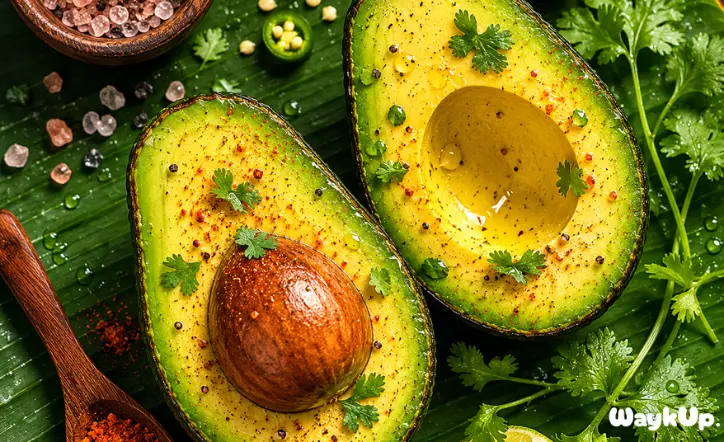
You have probably seen it on Instagram, spotted it at Nature’s Basket, or heard your gym trainer mention it. Avocado, also called butter fruit in South India, is not just a trend. It is one of the most nutrient-dense foods on the planet, and the science actually backs that up.
In simple terms: avocado is a fruit that is rich in healthy monounsaturated fats, fibre, potassium, folate, and vitamins C, E, and K. It has zero sugar (almost), a low glycemic index of 40, and contains more potassium than a banana. For Indians managing lifestyle diseases like hypertension, diabetes, or high cholesterol, this fruit deserves a serious look.
What Does Avocado Nutrition Actually Look Like?
Here is the full nutritional breakdown per 100 grams of raw avocado, based on USDA data:
|
Nutrient |
Per 100g |
% Daily Value |
|
Calories |
160 kcal |
— |
|
Total Fat |
14.7g |
19% |
|
Monounsaturated Fat |
9.8g |
— |
|
Carbohydrates |
8.5g |
3% |
|
Dietary Fibre |
6.7g |
24% |
|
Sugar |
0.7g |
— |
|
Protein |
2g |
— |
|
Potassium |
485mg |
10% |
|
Folate |
81mcg |
20% |
|
Vitamin C |
10mg |
11% |
|
Vitamin E |
2.1mg |
14% |
|
Vitamin K |
21mcg |
17% |
A medium avocado weighs roughly 180–200 grams and delivers about 240–290 calories. Most of those calories come from fat. But the right kind of fat. Oleic acid, the same monounsaturated fatty acid that makes olive oil famous, makes up the bulk of avocado’s fat profile.
One thing that sets avocado apart from most fruits Indians eat mangoes, bananas, chikoo is that it has almost no sugar. That 0.7 grams of sugar per 100g is negligible compared to a banana’s 12 grams.
What Are the Real Health Benefits of Avocado for Indians?
Can Avocado Actually Protect Your Heart?
Cardiovascular disease is the number one killer in India, responsible for nearly 28% of all deaths according to ICMR data. Avocado has a direct role to play here.
A landmark 2022 study published in the Journal of the American Heart Association, led by Dr. Frank Hu of Harvard T.H. Chan School of Public Health, followed over 110,000 adults for 30 years. People who ate two or more servings of avocado per week had a 21% lower risk of heart disease compared to those who ate none.
The mechanism is specific: oleic acid reduces LDL (bad) cholesterol while maintaining or raising HDL (good) cholesterol. The potassium content (485mg per 100g) helps lower blood pressure by counteracting sodium’s effects on arterial walls. For a country where hypertension affects 1 in 3 adults, that matters.
Read Also: Best Protein-Rich Vegetarian Foods: Your Complete Guide to Plant-Based Nutrition
Does Avocado Help Your Gut and Even With an Indian Diet?
A 2021 randomised clinical trial published in the Journal of Nutrition studied 163 overweight adults. Those who ate avocado daily for 12 weeks showed lower bile acid concentrations in their gut and greater bacterial diversity compared to the control group.
More specifically, avocado increased populations of Faecalibacterium, Lachnospira, and Alistipes bacteria that produce short-chain fatty acids including butyrate. Butyrate is essentially gut-lining fuel. It reduces inflammation and is associated with a lower risk of colon cancer.
For Indians who eat a lot of refined carbohydrates (white rice, maida), adding avocado’s 6.7g of fibre per 100g is a meaningful upgrade.
Does Avocado Help Manage Blood Sugar?
Unlike most fruits, avocado has no naturally occurring sugars and does not affect the glycemic response, a point emphasised by registered dietitian Wendy Bazilian in multiple published commentaries.
A large cross-sectional study found that women who consumed 30–38 grams of avocado daily had significantly lower odds of developing type 2 diabetes than non-consumers. Given India’s status as the diabetes capital of the world, with over 101 million people living with the condition as of 2023, this is worth noting.
Read Also – Drumstick (Moringa): Benefits, Uses & Nutrition Guide
Is Avocado Good for Skin and Hair?
Yes, but the reason is more interesting than “it has vitamins.”
Avocado’s vitamin C content helps synthesise collagen. The structural protein that keeps skin firm. Its vitamin E acts as a lipid-soluble antioxidant, protecting skin cell membranes from oxidative damage caused by sun exposure (something highly relevant in India’s tropical climate).
Additionally, the healthy fats in avocado enhance the intestinal absorption of fat-soluble vitamins A, D, E, and K from other foods you eat alongside it. Think of it as a nutrient multiplier for your whole meal.
PharmEasy’s nutritionists note that the folate in avocado may also help regulate mood and sleep by preventing the build-up of homocysteine, which otherwise impairs nutrient delivery to the brain.
Is Avocado Good for Weight Loss or Does the Fat Make You Gain Weight?
This is the most common concern Indians have, and it deserves a direct answer.
Avocado does not make you fat if eaten in the right portions.
Here is why. The 6.7 grams of fibre per 100g combined with nearly 15 grams of fat creates a powerful satiety response. You feel full faster, stay full longer, and end up eating less overall. Research published in Nutrition Journal found that adding half an avocado to lunch reduced the desire to eat for the next 3–5 hours by 40% in overweight participants.
The key is portion control. Half an avocado (about 75–80 grams) contains approximately 120 calories. That is a snack, not a meal. Eating a whole avocado plus a full plate of biriyani is where the problem starts not the avocado itself.
Its glycemic index of 40 is classified as low. This means it does not spike blood sugar, does not trigger insulin spikes, and does not push your body into fat-storage mode the way refined carbohydrates do.
Practical guideline for Indians: Use half an avocado to replace one cooking oil-heavy side dish. Your total calorie count stays neutral, but your nutrient density goes up significantly.
Avocado for Men vs Women: Are the Benefits Different?
For Indian Women
Avocado is particularly valuable for women at every life stage.
During menstruation and PMS, the magnesium and B vitamins in avocado help reduce fatigue, cramping, and mood swings. Healthy fats support the production of oestrogen, progesterone, and hormones that need dietary fat to function properly.
During pregnancy, avocado’s 81mcg of folate per 100g supports healthy fetal neural tube development and reduces the risk of certain birth defects. The ICMR recommends 400–600mcg of folate daily for pregnant women; one medium avocado provides about 130mcg, covering roughly 20–30% of that requirement.
During perimenopause, when estrogen fluctuates and cardiovascular risk rises, avocado’s combination of healthy fats and potassium provides compounded protection for both the heart and bones.
Read Also – Best Food For Hair Growth and Thickness: Transform Your Hair in Days
For Indian Men
For men, especially those with desk jobs or physically active lifestyles, avocado offers three targeted benefits:
Muscle recovery: Potassium (485mg/100g) prevents muscle cramps and speeds recovery after workouts. For someone training 4–5 days a week, this is comparable to, but nutritionally richer than, a sports drink.
Testosterone support: Dietary fat is essential for testosterone synthesis. Avocado’s monounsaturated fat profile is specifically associated with healthier testosterone levels in studies involving men on low-fat diets.
Sustained energy: The absence of sugar spikes means no afternoon crash. A common complaint among Indian men eating high-carb lunches (rice and roti combinations). Adding avocado to lunch keeps energy levels steady for 3–4 hours.
Is Avocado Expensive in India? Where Do You Buy It?
Let’s be direct: yes, avocado is more expensive in India than your typical desi fruit.
Current prices (approximate, 2024–2025):
|
Purchase Channel |
Price Range |
|
Bangalore/Chennai mandi (local Indian variety) |
₹60–120 per piece |
|
BigBasket / Zepto (Indian grown) |
₹60–100 per piece |
|
Nature’s Basket / D-Mart (imported Hass) |
₹150–300 per piece |
|
Mumbai supermarket (premium Hass) |
₹350–600 per kg |
India imports avocados primarily from Kenya, Peru, and Tanzania. Some domestic production happens in Tamil Nadu, Kerala, Karnataka, and Maharashtra, where the climate is suitable. The Indian-grown variety is more affordable but slightly less buttery than the Hass.
Smart buying tips for Indians:
- Buy from BigBasket or Zepto for better prices on Indian-grown avocados
- Look for “semi-ripe” versions then they ripen in 2–3 days at room temperature
- Domestic season peaks March to May; prices dip during this window
- Avoid black, mushy avocados in supermarkets; the skin should give slightly when pressed
How Do You Actually Eat Avocado in an Indian Kitchen?
This is where most Indian food blogs fail. They tell you to make guacamole or avocado toast, neither of which fits the way most Indian households eat.
Here are practical, actually-usable ways to incorporate avocado into an Indian diet:
- Avocado Chutney (Butter Fruit Chutney) Blend half an avocado with coconut, green chilli, ginger, coriander leaves, and a tadka of mustard and curry leaves. Serve with dosa or idli. This is already popular in Tamil Nadu and Karnataka.
- Avocado Roti Spread Mash avocado with a pinch of salt, jeera powder, and lemon juice. Use it as a spread inside a roti wrap instead of cream or butter. Works excellently with paneer tikka wraps.
- Avocado Smoothie Blend half an avocado with milk (or oat milk), a banana, and a teaspoon of honey. High in calories but extremely filling, as good as a post-workout meal or breakfast.
- Avocado Dal Topping Add thin slices of ripe avocado on top of dal before serving. The creaminess complements the earthiness of masoor or moong dal without disrupting the flavour.
- Direct with Lemon and Black Salt Cut in half, squeeze lemon, add black salt and chilli powder, eat with a spoon. The simplest method: zero preparation needed.
Read Also – Detox Water: The Complete Guide to Health, Recipes & Usage
Can Avocado Have Side Effects?
Avocado is generally safe, but a few concerns are worth addressing honestly.
- Caloric overload if over-consumed One full avocado contains 240–290 calories. Eating two avocados a day, as some fitness influencers suggest, adds 500+ calories purely from this fruit. For someone trying to maintain a caloric deficit, that erases the deficit entirely.
- Latex-fruit syndrome Roughly 30–40% of people allergic to latex are also allergic to avocado due to cross-reactive proteins. Symptoms include oral itching, swelling, or hives. If you have a latex allergy, introduce avocado carefully and watch for a reaction.
- Drug interactions Avocado contains vitamin K, which can reduce the effectiveness of blood-thinning medications like warfarin. If you are on anticoagulant therapy, speak with your doctor before adding avocado regularly to your diet.
- Not suitable as a baby’s first food without guidance Avocado is sometimes recommended as a weaning food for infants. While the fat content supports brain development and it is naturally low in sugar, always consult a paediatrician before introducing it before 6 months.
FAQ
Q1: How many avocados should an Indian eat per week?
Most research, including the Harvard 30-year cohort study, shows benefits at 2 or more servings weekly. A serving is roughly half a medium avocado (75-80 grams). For most Indian adults, eating half an avocado 3-4 times a week is a realistic, cost-effective target that fits easily into daily meals.
Q2: Can people with high cholesterol eat avocado?
Yes, and it’s particularly beneficial here. The oleic acid in avocado lowers LDL (bad) cholesterol while raising HDL (good) cholesterol. A 2015 trial in the Journal of the American Heart Association found one avocado daily reduced LDL by 13.5 mg/dL, making it one of the few whole foods with measurable cholesterol benefits.
Q3: Does avocado cause weight gain?
Not in reasonable portions. Its fibre and healthy fat content promote satiety, which actually reduces total calorie intake over the day. Adding half an avocado to lunch can suppress appetite for 3-5 hours. Problems only show up with excessive daily consumption stacked on top of a calorie surplus.
Q4: Is avocado available year-round in Indian cities?
Yes, in most metros like Delhi, Mumbai, Bengaluru, Chennai, Hyderabad and Pune through retail chains and delivery apps like BigBasket and Zepto. Domestic production peaks March to May, when prices drop. Outside that window, most avocado stock is imported from Kenya or Peru, pushing prices higher. Tier-2 cities may see seasonal gaps.
Q5: Is avocado good for thyroid patients in India?
Generally yes. Avocado isn’t goitrogenic like some cruciferous vegetables, and its selenium and vitamin E support thyroid function. If you’re on medication like levothyroxine, eat avocado a few hours apart from your dose since the fat content can slow drug absorption. Check with your endocrinologist for personalized guidance.
Conclusion
Avocado earns its reputation. For Indian men and women managing lifestyle risks. hHigh blood pressure, rising cholesterol, erratic blood sugar, hormonal fluctuations. It is one of the few foods where clinical research and practical nutrition align cleanly.
The single clearest recommendation: start with half an avocado, three to four times a week. Use it as a spread, a chutney, or a dal topping methods that integrate naturally into Indian eating habits without overhauling your entire kitchen.
The cost is real, but so is the value. At roughly ₹60–100 per piece from BigBasket or Zepto, half an avocado costs about ₹30–50. That is less than a packet of biscuits, delivers far more nutrition, and does not spike your blood sugar.
Your next step: pick up two avocados this week. Try the avocado chutney with your morning dosa and the roti-wrap spread at lunch. Give it two weeks. Your gut, your skin, and your lipid panel may all have something to say about it.
Read Also – Veg Foods With More Vitamin D Than Eggs