
















 Follow Us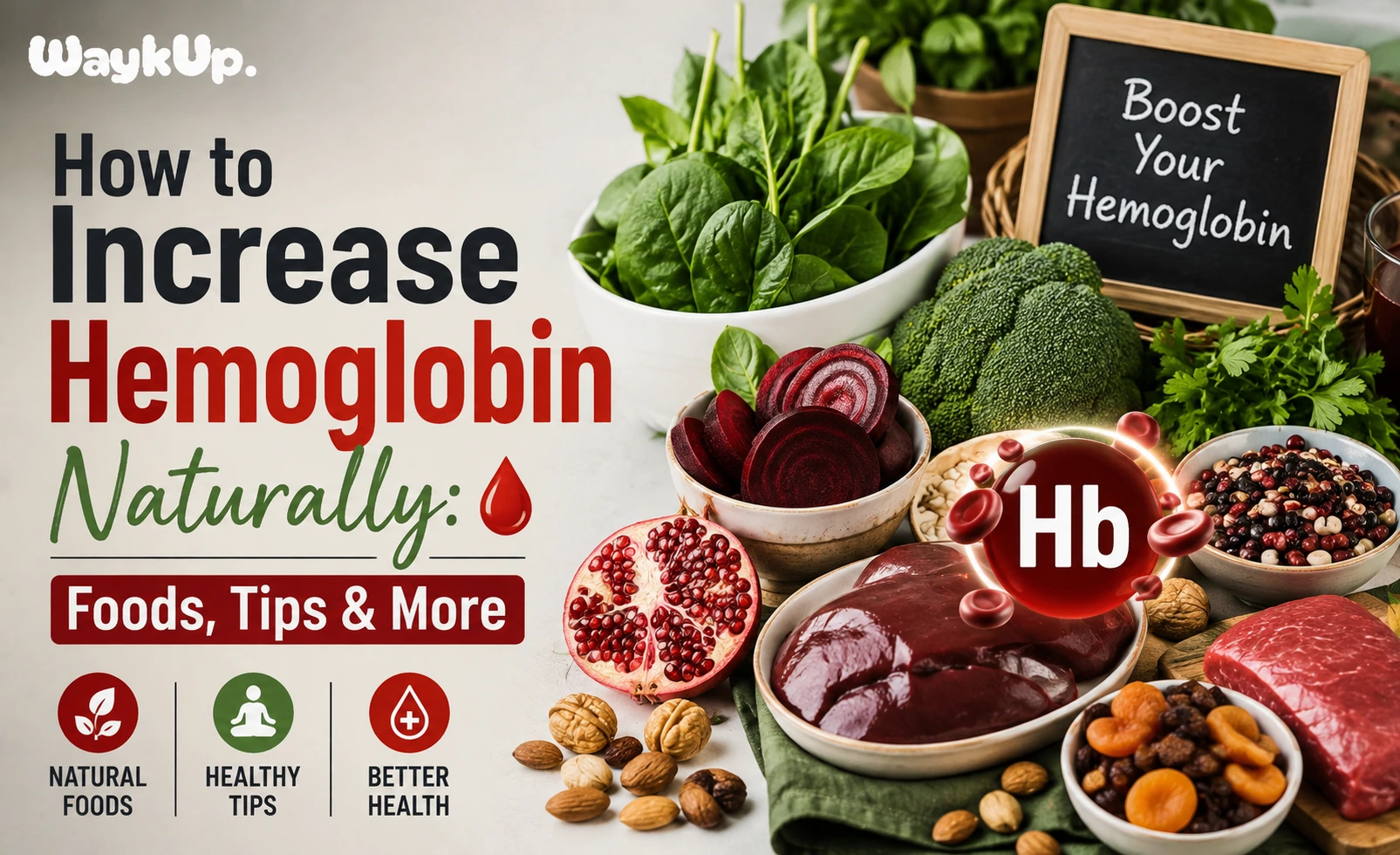
Tired for no real reason. Winded after one flight of stairs. Skin looking a shade paler than it used to. Sound familiar? That’s usually low hemoglobin talking, and honestly, it’s way more common than most people think. In India especially, a huge chunk of women (and plenty of men too) are running low on iron and don’t even realize it.
Here’s the part that should make you feel better: figuring out how to increase hemoglobin doesn’t mean overhauling your entire life. A handful of smart food swaps and a few daily habits, done consistently, can bring your numbers back up in a matter of weeks. This guide covers what hemoglobin actually does in your body, what a normal hemoglobin level chart looks like, and the foods and tricks that genuinely move the needle.
What Is Hemoglobin and Why Does It Matter
Hemoglobin is a protein sitting inside your red blood cells. Its whole job? Carry oxygen from your lungs to every part of your body, then bring carbon dioxide back out. Simple in theory. When levels drop too low though, your organs and tissues start running short on oxygen, and that’s exactly when the fatigue, dizziness, and breathlessness kick in.
This whole condition has a name: anemia. And it’s one of the most widespread nutritional issues across India, hitting women of reproductive age, pregnant women, and kids the hardest. Nine times out of ten, iron deficiency is the root cause, though low B12 and folate can play a part too.
Normal Hemoglobin Level Chart
Before fixing anything, you need a baseline. So here’s a rough hemoglobin range for female and male adults, plus kids:
|
Group |
Normal Hemoglobin Range (g/dL) |
|
Adult men |
13.5 to 17.5 |
|
Adult women |
12.0 to 15.5 |
|
Pregnant women |
11.0 or above |
|
Children (6–12 years) |
11.5 to 15.5 |
|
Newborns |
14.0 to 24.0 |
Worth mentioning, this is a general reference, not gospel. Labs vary a little. The only way to actually know where you stand is a blood test ordered by your doctor.
Signs Your Hemoglobin Might Be Low
You don’t need a lab report to get suspicious. Watch for:
- Feeling wiped out even after a full night’s sleep
- Pale skin, lips, or nails
- Getting breathless doing something light, like climbing stairs
- Headaches or dizziness that show up out of nowhere
- Cold hands and feet, even indoors
- A heartbeat that feels off, rapid or irregular
- Nails that break easily, or hair fall that’s more than usual
If two or three of these ring a bell, get a CBC (complete blood count) done. It’s cheap, quick, and gives you an actual number to work with instead of guessing.
How to Increase Hemoglobin Naturally: The Food List
This is really the meat of it. Hemoglobin increase food choices are your strongest, most sustainable tool here, and the good news is most of these are already sitting in Indian kitchens.
Iron-Rich Foods to Increase Hemoglobin
Iron is the raw material hemoglobin is built from. Lean into:
- Leafy greens — spinach, methi (fenugreek leaves), amaranth leaves. All loaded with non-heme iron.
- Lentils and legumes — moong dal, chana, rajma, masoor dal. Great vegetarian staples for this.
- Jaggery (gur) — an old-school Indian fix, works especially well paired with roasted chana.
- Beetroot — iron and folate in one package.
- Pomegranate — iron-rich, and it helps with healthy blood flow too.
- Dates and raisins — an easy snack that quietly does a lot of work.
- Sesame seeds (til) — small, but iron-dense. Toss them into laddus or chutneys.
- Drumstick (moringa) leaves — genuinely one of the most iron-packed greens you’ll find in an Indian market. For more on how to use it day to day, check our Drumstick (Moringa): Benefits, Uses & Nutrition Guide.
Vitamin C: The Absorption Booster
Iron by itself only gets you so far. Your body absorbs it far better with vitamin C in the mix. Pair your iron-rich meals with:
- Amla (Indian gooseberry)
- Oranges and lemons
- Guava
- Bell peppers
- Tomatoes
Small habit, big payoff: squeeze some lemon over your dal or salad. Feels minor, but it genuinely helps your body absorb more of the iron you’re eating.
Vitamin B12 and Folate Sources
Vegetarians, this one’s for you especially. B12 deficiency is common and directly hits hemoglobin production. Look at:
- Fortified cereals and plant milks
- Curd, paneer, and other dairy
- Eggs, if that’s part of your diet
- Leafy greens for folate
- Our guide on Best Protein-Rich Vegetarian Foods has a wider list worth browsing if you want more plant-based options for overall blood health.
How to Increase Hemoglobin Level Quickly
Need faster results? Here’s what actually helps in the short run:
- Pair iron with vitamin C at every meal: This one habit alone speeds things up noticeably.
- Cook in cast iron cookware: Sounds odd, but food cooked in iron pans picks up trace amounts of dietary iron.
- Keep tea and coffee away from mealtimes: Tannins block iron absorption, so leave at least an hour’s gap.
- Don’t stack calcium supplements on top of iron-rich meals: They compete for absorption, so space them out.
- Sleep enough, stress less: Sounds unrelated, but chronic stress and poor sleep quietly mess with red blood cell production too.
How to Increase Hemoglobin in a Week
Seven days is enough time for your body to respond, as long as you stay consistent. Here’s a rough plan:
- Days 1–2: Kick off breakfast with vitamin C alongside iron, think amla juice with a handful of soaked raisins.
- Days 3–4: Work in a beetroot-pomegranate juice or salad at lunch or as an evening snack.
- Days 5–6: Add a jaggery-sesame snack daily, and swap one regular meal for something dal or leafy-green heavy.
- Day 7: Check in with yourself. Energy, breathlessness, skin tone, these are decent early signals. A blood test a few weeks later will tell you the real story.
Not a magic seven-day cure for everyone, especially if the anemia’s moderate to severe, but it’s a solid rhythm to build on.
How to Increase Hemoglobin During Pregnancy
Pregnancy ramps up your body’s iron needs since blood volume expands to support the baby. That’s exactly why anemia shows up so often during this stage, and why it deserves real attention.
- Stick to iron-folate supplements if your doctor’s prescribed them. Diet alone often isn’t enough here.
- Go small and frequent with meals, since nausea can make bigger meals rough to handle.
- Don’t skip dairy and B12 sources, they support both you and the baby.
- Keep up with prenatal checkups. Hemoglobin’s usually tracked closely throughout pregnancy anyway.
One thing worth repeating: never start or change iron supplements during pregnancy on your own. Dosage matters, and too much iron can cause its own problems.
Foods and Habits to Avoid
What you skip matters just as much as what you eat. A few habits can quietly undo your progress:
- Tea or coffee right after meals
- Calcium-heavy foods eaten alongside iron-rich ones
- Processed food with barely any nutritional value
- Skipping meals altogether, which throws off consistent intake
Curious about other morning habits that mess with digestion and absorption? Our piece on Foods to Avoid on Empty Stomach covers some related ground.
When to See a Doctor
Diet and lifestyle tweaks work fine for mild deficiency, but they’re not a replacement for actual medical care. Get checked if:
- Your fatigue feels severe or keeps getting worse
- You notice chest pain, a racing heart, or fainting spells
- You’re pregnant and haven’t had hemoglobin checked recently
- Nothing’s improved after 4 to 6 weeks of dietary changes
Doctors might suggest supplements, injections, or further tests to rule out things like thalassemia or ongoing blood loss. We’ll also be covering signs of thyroid problems in women soon, a condition that can drain your energy in similar ways and sometimes gets confused with anemia.
FAQs: How to Increase Hemoglobin Naturally
Q1. What foods increase hemoglobin the fastest?
Spinach, jaggery, lentils, and pomegranate tend to work fastest, especially paired with a vitamin C source like lemon or amla.
Q2. Can hemoglobin increase in one day?
Not really. It’s a gradual process. Give it one to two weeks of consistent effort before expecting real change.
Q3. What is a normal hemoglobin level for women?
Generally between 12.0 and 15.5 g/dL for adult women, though pregnant women have a slightly different healthy range.
Q4. Are iron supplements necessary, or is food enough?
Mild deficiency? Food usually does the job. Moderate to severe anemia, especially in pregnancy, typically needs supplements alongside diet.
Q5. Does exercise affect hemoglobin levels?
Moderate exercise helps circulation and red blood cell function. Go too hard without proper nutrition though, and it can actually drain iron stores. Balance is key.
Final Thoughts
Raising hemoglobin naturally isn’t about drastic diets or expensive supplements. It comes down to small, repeatable choices, pairing iron with vitamin C, cutting the habits that block absorption, and giving your body what it actually needs. Start with your next meal. Stay consistent. Check back with a blood test in a few weeks to see where you actually stand.