















 Follow Us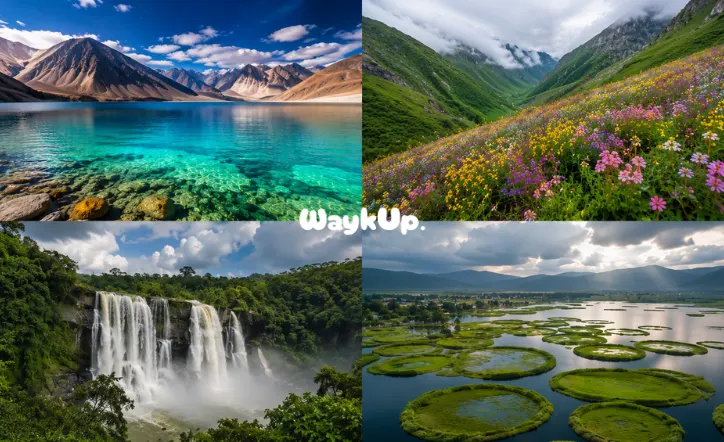
There are places in India that make people question photographs.
Not because the images are heavily edited.
Because some of these places barely look real.
Lately, the reaction is almost predictable.
A photo of Pangong Lake shows up online. Or a valley covered in flowers. Maybe a stretch of white salt glowing at night.
Within minutes, people start saying the same thing.
“This has to be AI.”
Hard to blame them.
The internet is packed with artificial landscapes now. Mountains floating in the sky. Impossible waterfalls. Lakes that look like melted sapphire.
The thing is, India already has places that look edited.
Not edited badly. Edited too well.
A bright blue lake in Ladakh. A valley that turns into a carpet of flowers for a few weeks every year. Even a white desert that glows under moonlight.
People see these photos online and assume somebody pushed the saturation slider too far.
Then they visit.
That’s usually when the disbelief starts.
Pangong Lake
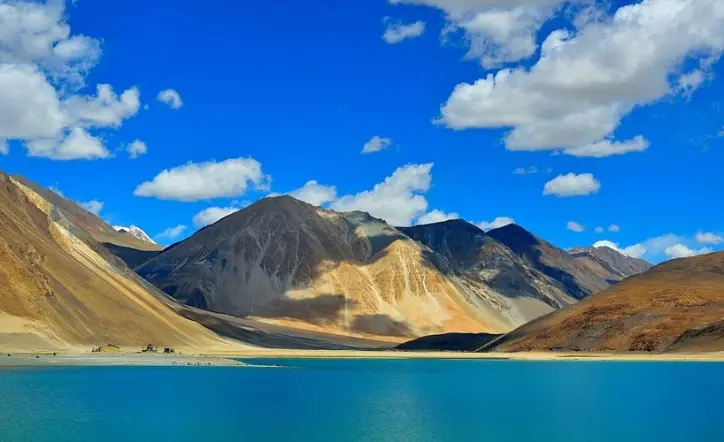
Most photos of Pangong Lake look edited.
Most photographs don’t really prepare you for it.
The colour keeps shifting depending on where you’re standing. Sometimes it looks deep blue. A few minutes later, a different section starts looking almost turquoise. Near the shoreline, there are patches that seem slightly green under the sunlight.
It doesn’t need filters. It barely needs a camera.
The lake sits high in Ladakh, close to the India–Tibet border. The landscape around it is rough and almost colourless. Dry mountains stretch across the horizon with very little vegetation in sight.
Then your eyes drift back to the water.
Suddenly, all those muted browns and greys make the lake seem even brighter.
The contrast is ridiculous.
One side looks like a desert mountain range. The other side looks like somebody spilled liquid sapphire across the landscape.
People often spend hours sitting quietly near the shore.
Not because there is a lot to do.
Because the scenery keeps changing.
Clouds move. Shadows shift. The water reflects different shades every few minutes.
The lake almost feels alive.
Photos help, but they don’t completely prepare you for the first view of Pangong Lake.
Read Also: Top 5 Budget-Friendly Bikes Perfect for Road Trips
Valley of Flowers National Park
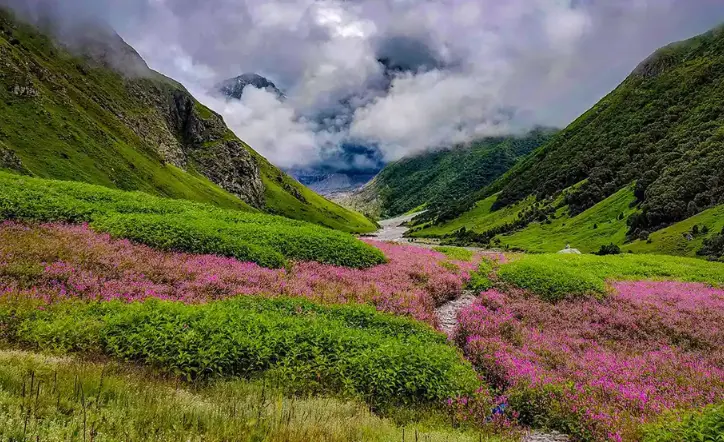
There are landscapes that look beautiful.
Then there are landscapes that look painted.
This valley belongs in the second category.
For a brief period each year, the valley changes completely.
Wildflowers start appearing everywhere. Not in neat rows or patches, but in huge stretches that seem to take over the landscape.
Pinks blend into purples. Yellows show up where you least expect them. Some areas look almost painted from a distance.
It feels chaotic up close, yet oddly perfect when viewed across the valley.
Mist often drifts through the mountains in the background.
That part really completes the picture.
A photograph from the Valley of Flowers can easily be mistaken for digital artwork.
Photos don’t always help.
People often expect the colours to be boosted or edited. Then they arrive and realise the valley really does look like that.
Another thing many photographs miss is how quickly the scenery changes. New flowers appear as the weeks pass, while others begin to fade away.
The valley rarely looks exactly the same for long.
One reason this destination feels special is the effort required to reach it.
The journey is not particularly easy.
And perhaps that’s exactly why the valley still feels untouched.
No giant commercial setup.
No excessive development.
Just mountains and an explosion of colour.
Read Also: Best Travel Destinations in May in India (2026 Guide)
Loktak Lake
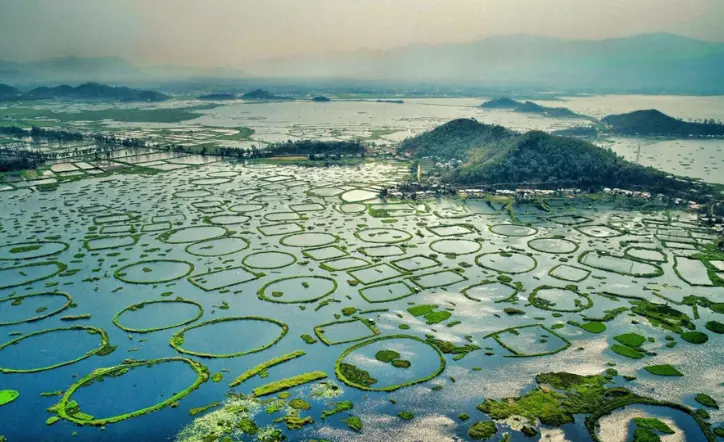
The aerial photographs are what usually grab attention first.
Circular green patches floating across a giant lake.
Almost perfectly shaped.
Almost too perfect.
What makes Loktak Lake stand out isn’t the water itself.
It’s the floating islands scattered across the lake. Known as phumdis, these masses of vegetation drift and shift over time.
From above, they look like someone carefully designed a graphic illustration.
Nature had other plans.
The patterns constantly change.
Nothing about Loktak feels fixed.
The floating patches are always shifting around.
A group that appears connected one day might look completely different a few weeks later.
That’s part of what makes Loktak so interesting. The view rarely stays the same.
Morning is usually the best time to see it.
Mornings tend to be quiet around Loktak Lake.
A thin layer of mist often sits above the water, especially before sunrise. Small fishing boats start appearing long before the lake fully wakes up, moving between floating islands that are still partly hidden from view.
The whole scene feels unusually calm without trying too hard to impress anyone.
Everything feels calm.
Almost dreamlike.
It is one of those rare places where even drone footage struggles to capture the scale properly.
Read Also: Train Experiences in India You Should Definitely Try
Rann of Kutch
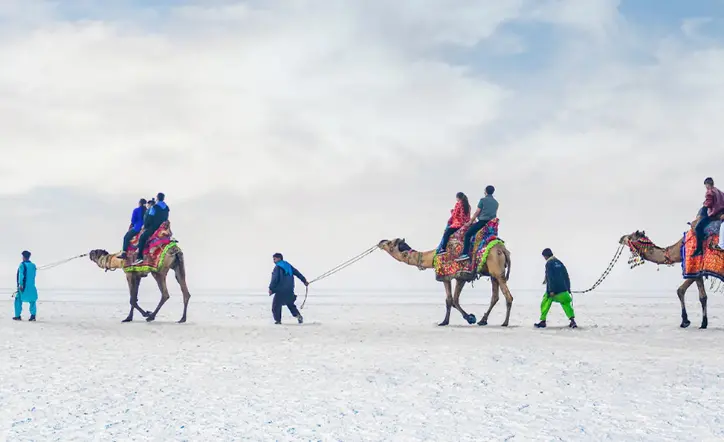
White rann.
That is the first thing most people remember.
Just endless white.
The Great Rann of Kutch stretches so far that the horizon sometimes appears blurred. The salt desert creates an almost surreal environment where distances become difficult to judge.
During the day, sunlight reflects strongly off the surface.
By evening, the landscape starts changing character.
Then comes the full moon.
The white ground begins glowing softly beneath moonlight and suddenly the entire place feels like another planet.
Many travellers mention the silence.
There isn’t much to interrupt it.
No forests.
No mountains.
No busy city sounds.
Just open space stretching in every direction.
The simplicity is exactly what makes it extraordinary.
Read Also: Tirthan Valley, Himachal Pradesh – Complete Travel Guide
Living Root Bridges
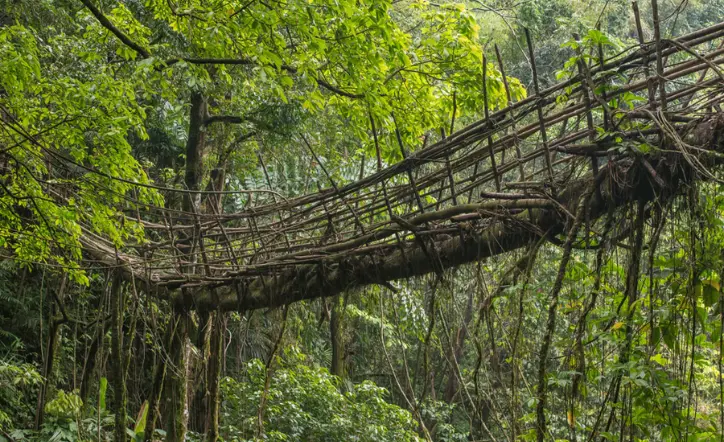
Some places sound fictional before you even arrive.
This is one of them.
Bridges made from living tree roots.
Not wooden bridges.
Not rope bridges.
Actual living roots that have been guided and shaped over decades.
Hidden within the forests of Meghalaya, these remarkable structures feel like something from a fantasy novel.
The roots twist together naturally, forming pathways strong enough to support people crossing rivers below.
Rain usually adds another layer of beauty.
Everything turns greener.
The roots darken slightly.
Water flows beneath the bridge while thick vegetation surrounds the area from every side.
The famous Double Decker Living Root Bridge often leaves visitors speechless.
Photographs look impressive.
Standing there feels different.
The place has an atmosphere that cameras rarely capture properly.
Read Also: Best Time to Visit Vietnam: Complete Travel Guide 2026
Nubra Valley
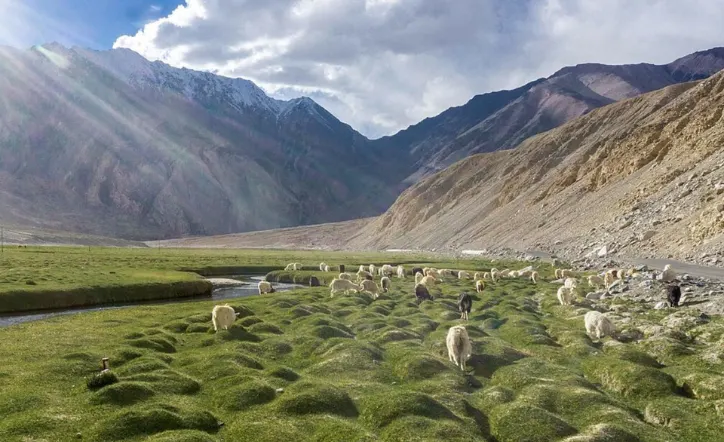
A lot of people arrive expecting mountains.
They get mountains.
What they don’t expect is the desert.
Nubra Valley is one of those strange geographical combinations that seems impossible until you see it.
Sand dunes appear between towering Himalayan peaks. Rivers cut through the valley. Small villages add patches of green to an otherwise rugged landscape.
Then there are the camels.
Double-humped Bactrian camels wandering across cold desert terrain in Ladakh somehow make the scenery feel even more unusual.
Nothing about Nubra follows normal expectations.
Every turn in the road reveals something different.
A river.
A monastery.
A dune field.
Snow-covered mountains.
The valley often looks like multiple landscapes stitched together into one image.
Yet somehow everything fits.
Read Also: Best Zero Network Places in India for Ultimate Digital Detox and Peace
Athirapally Waterfalls
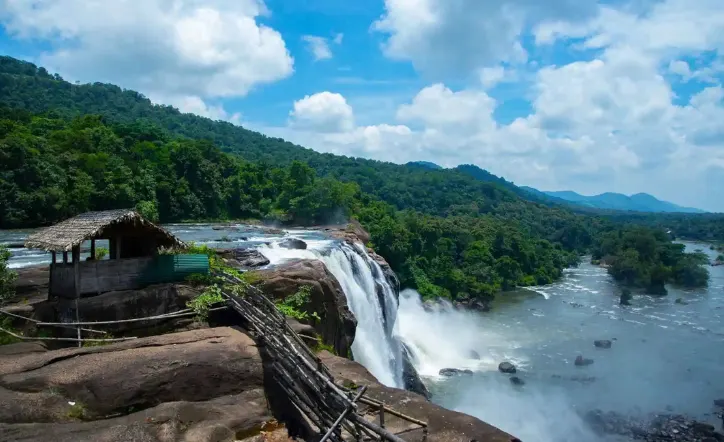
The sound arrives before the waterfall does.
A deep, distant roar hidden beneath the sounds of the surrounding forest.
Then suddenly the trees open.
Then the waterfall comes into view.
Water rushes over a wide rocky cliff and crashes into the gorge below. The spray is so constant that parts of the surrounding area often remain damp.
Athirapally has appeared in several films over the years. Once you’re standing there, that isn’t particularly surprising.
Thick greenery surrounds the waterfall and the forest feels alive with movement. Bird calls drift through the trees, even above the sound of the water.
During the monsoon, the flow becomes dramatically stronger and the entire scene feels more powerful.
Many visitors expect to spend a few minutes here and leave.
That rarely happens.
Before long, most people stop looking at their phones and simply watch the water thunder into the gorge below.
The scene never really becomes repetitive.
Read Also: Top 10 Most Powerful Spiritual Places in India | Holy Pilgrimage Guide
Ziro Valley
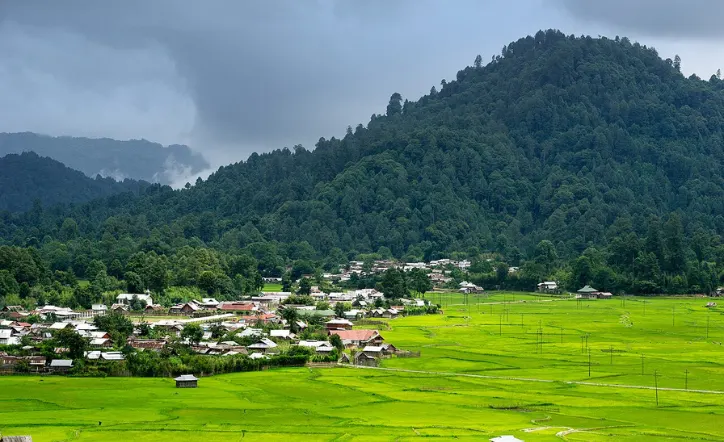
Not every stunning landscape relies on dramatic colours.
Sometimes balance is enough.
Ziro Valley has a quieter kind of beauty.
Rolling hills surround neatly arranged rice fields. Small settlements sit peacefully between patches of green. Morning fog drifts slowly across the valley, softening everything it touches.
Nothing feels rushed here.
Perhaps that’s why the scenery leaves such a strong impression.
Viewed from higher points, the agricultural patterns create shapes that almost resemble digital artwork.
Everything appears carefully arranged despite being completely natural.
The changing seasons alter the valley’s appearance dramatically.
Bright green during cultivation.
Golden during harvest.
Soft grey when clouds settle low across the hills.
Every version feels worth seeing.
Also Read: Visa-Free Countries for Indians: Your Ultimate 2026 Travel Guide
Why These Places Look AI-Generated
A few common patterns appear across all these destinations.
The colours often seem more vivid than expected.
The geographical contrasts feel unusual.
Some landscapes contain elements that normally shouldn’t exist together, like deserts surrounded by snow-covered mountains.
Others create perfect symmetry through reflections, floating formations, or vast open spaces.
Modern AI image generators frequently produce scenes inspired by these kinds of visuals.
Ironically, nature created them first.
The reason people question these photographs isn’t because they look fake.
It’s because they look too extraordinary to be ordinary.
Travel Tips Before Visiting
Remote destinations need a little planning.
Especially in India.
Carry layers if travelling to Ladakh. Temperatures can change quickly, even during summer.
Keep extra time in your itinerary. Mountain weather has its own schedule.
Avoid rushing through these places for social media photos alone. The most memorable moments usually happen when the camera stays in the bag for a while.
Network connectivity can be unreliable in several of these regions.
Download maps beforehand.
Respect local communities.
Leave no litter behind.
And don’t assume online photos are exaggerated.
Sometimes they are surprisingly accurate.
FAQs
Which place in India looks most like an AI-generated image?
Pangong Lake and the Rann of Kutch are often considered the most surreal-looking due to their unusual colours and vast open scenery.
When is the best time to visit the Valley of Flowers?
July to September is generally the best period because the flowers are in bloom.
Are the Living Root Bridges natural?
Yes. Local communities guide living tree roots over many years until they become strong enough to function as bridges.
Can beginners travel to Nubra Valley?
Yes. Most travellers visiting Ladakh include Nubra Valley in their itinerary.
Is Loktak Lake worth visiting?
Absolutely. The floating islands create a landscape unlike anything else in India.
Which destination is best for photography?
Pangong Lake, Athirapally Waterfalls and the Rann of Kutch are among the most photographed locations on this list.
Is Ziro Valley crowded?
Not usually. It remains relatively peaceful compared to many popular hill destinations.
Which place changes the most during different seasons?
The Valley of Flowers undergoes one of the most dramatic seasonal transformations in the country.
Final Thoughts
Some landscapes challenge expectations.
These eight places do exactly that.
A lake that changes colours. Floating islands drifting across still water. Bridges grown from living roots. A desert that glows beneath moonlight.
They sound like prompts typed into an image generator.
Yet every one of them exists.
Real places. Real scenery. Real moments that sometimes look too extraordinary to be true.
And perhaps that’s what makes them unforgettable.
Not because they resemble AI-generated images.
Because they remind people that nature can still create things no algorithm can fully imitate.
Recent Blogs:
15 Types of Ear Piercings for Women: Helix, Lobe & Upper Ear Piercing Ideas
Suryavanshi vs Kohli vs Gill vs Sudharsan: Who Will Finish IPL 2026 With Orange Cap?
Avocado: Benefits, Nutrition, Side Effects & How to Eat It in India
Best Simulator Games in 2026: A Complete Guide for Indian Gamers