















 Follow Us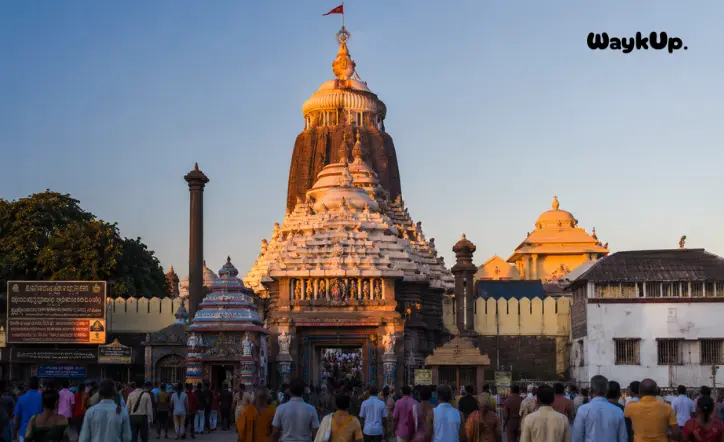
Few temples in India carry the weight of spiritual history that Puri’s Shree Jagannath Temple does. One of the four sacred Char Dham pilgrimage sites for Hindus, this 12th-century temple on Odisha’s eastern coast has been drawing devotees from across the country and the world for nearly a thousand years. Whether you are planning your first visit or returning for the Rath Yatra, here is everything you need to know before you go.
For more travel guides and cultural destinations across India, explore the Entertainment and Lifestyle section on WaykUp.
Quick Information at a Glance
|
Temple Name |
Shree Jagannath Temple |
|
Location |
Grand Road (Bada Danda), Puri, Odisha 752001 |
|
Deity |
Lord Jagannath, Lord Balabhadra, Goddess Subhadra |
|
Built In |
12th century AD (by King Anantavarman Chodaganga Deva) |
|
Architecture |
Kalinga style, 65-metre Deul (Shikhara tower) |
|
Entry Fee |
Free for all (darshan). Special Rs 50, VIP Rs 500 |
|
Darshan Timings |
5:00 AM to 10:30 PM (approx.) |
|
Best Time to Visit |
October to March; early morning before 8 AM |
|
Nearest Railway Stn. |
Puri Railway Station (2.8 km) |
|
Nearest Airport |
Biju Patnaik International Airport, Bhubaneswar (60 km) |
|
Nearest Bus Stand |
Puri Bus Stand (1.9 km) |
|
Who Can Enter |
Hindus only (inner sanctum). Non-Hindus can view from Raghunandan Library rooftop |
History: A Temple Built by a King’s Vision
The Jagannath Temple in its current form was built in the 12th century AD by King Anantavarman Chodaganga Deva of the Eastern Ganga dynasty, with the Vimana (main tower) rising 65 metres above the ground and visible for miles around Puri. The temple was later renovated and expanded by successive rulers through the 16th century.
The deities at the centre of the temple are unique in all of Hinduism. Lord Jagannath, his brother Lord Balabhadra, and his sister Goddess Subhadra are represented by wooden idols carved from sacred neem wood. In a divine ritual called Nabakalebara, performed every 12 years, the idols are replaced with freshly carved ones, with the souls of the deities ceremonially transferred to the new forms.
Architecturally, the temple is a masterpiece of Kalinga style. The main Vimana or Deul (tower) is built so precisely that its shadow never falls on the ground at any time of day. The Neela Chakra (blue wheel) on top is made of eight metals called Asta Dhatu, and the flag above it uniquely flutters against the direction of the wind, phenomena that continue to fascinate visitors.
Darshan Timings: Full Daily Schedule
The temple follows a rigorous daily ritual schedule. Darshan is available for most of the day but is paused during specific internal pujas when the deities are in seclusion.
|
Time Slot |
Ritual / Puja |
Darshan Status |
|
5:00 AM |
Mangal Aarti (temple opens) |
Open from Bhitar Kaatha |
|
6:00 AM |
Mailam (change of flowers) |
Open |
|
6:00 to 7:30 AM |
Abakash, Besha |
Open |
|
7:30 to 8:45 AM |
Gopal Ballava Puja |
PAUSED (no darshan) |
|
8:45 to 11:00 AM |
Sakaal Dhoopa Puja |
Open from Baahar Kaatha |
|
11:00 AM to 1:00 PM |
Bhoga Mandapa Puja |
Open from Jagamohana |
|
2:00 to 5:30 PM |
Madhyanha Dhoop to Sandhya Alati |
Open from Nata Mandir + Jagamohana |
|
8:00 to 9:00 PM |
Sandhya Dhoop to Chandan Laagi |
Open (last darshan slot) |
|
Post 9:00 PM |
Pahuda (deities go to rest) |
Temple closes |
2026 Update: A new queue management system called Dhadi Darshan has been in effect from January 1, 2026. Devotees enter through designated gates and exit through separate ones for smoother flow. Avoid 9 AM to 11 AM and 4 PM to 6 PM as these are peak crowd periods.
Pro Tip: Reach by 5:30 to 6:00 AM on weekdays for the calmest darshan experience. Weekends, Ekadashi, and festival days draw significantly heavier crowds.
Entry Rules and Dress Code
- Who can enter: Only Hindus are permitted inside the main temple complex and inner sanctum. This is a strictly observed tradition.
- Non-Hindus: Can view the 65-metre Vimana and the Neela Chakra from the rooftop of Raghunandan Library, directly opposite the Singha Dwara (Lion Gate).
- Dress code: Modest clothing is required. Traditional Indian attire is preferred. No shorts, sleeveless tops, or revealing clothing.
- No photography: Strictly prohibited inside the temple. Leave your camera and phone camera unused once inside.
- No entry with leather items: Leather belts, bags, and shoes should be deposited at the cloakroom before entering.
- No fraud VIP darshan: There is no external agency selling VIP darshan passes. Book only at official counters inside the temple complex.
Darshan Types and Entry Fees
- Free Darshan: Available to all Hindus from 6 AM to 12 PM and 4 PM to 9 PM. Queues can be long.
- Special Darshan (Rs 50): Faster entry, available from 7 AM to 12 PM and 4 PM to 8 PM.
- Quick Darshan (Rs 100): Shorter waiting time than special darshan, same timings.
- VIP Darshan (Rs 500): Minimal wait. Available 7 AM to 12 PM and 4 PM to 8 PM. Book at the official counter near Singha Dwara or online at jagannath.nic.in.
How to Reach Puri Jagannath Temple
By Air
Fly into Biju Patnaik International Airport (BBI) in Bhubaneswar, approximately 60 km from Puri. Prepaid taxis cost Rs 750 to Rs 1,000 for the journey. An Odisha State Bus Transport (OSRTC) bus also connects Bhubaneswar airport area to Puri at lower cost.
By Train
Puri Railway Station is just 2.8 km from the temple and is well-connected to major Indian cities including Kolkata (Howrah), Bhubaneswar, Visakhapatnam, Delhi, Chennai, and Mumbai. Key trains include the Puri Express and Jagannath Express. Auto-rickshaws, cycle rickshaws, and taxis connect the station to the temple in under 15 minutes.
By Bus: Routes and Boarding Points
- From Bhubaneswar: OSRTC and private buses depart from Bhubaneswar Bus Stand and Baramunda Bus Terminal every 15 to 30 minutes. Journey time approximately 1.5 to 2 hours. Fare Rs 60 to Rs 100. This is the most common route for visitors arriving from Bhubaneswar airport or station.
- From Cuttack: Direct buses available from Cuttack Bus Stand to Puri. Journey approximately 2.5 hours via NH-16.
- From Kolkata: Overnight buses and OSRTC services run from Kolkata to Puri. Journey approximately 9 to 11 hours.
- From Visakhapatnam: Buses available from Visakhapatnam though the journey is long at 9 to 10 hours. Direct train is often more convenient.
- Local transport from Puri Bus Stand: Puri Bus Stand is 1.9 km from the temple. Auto-rickshaws charge Rs 30 to Rs 50. Cycle rickshaws are available for a slower, scenic ride along Grand Road.
Rath Yatra 2026: July 16
Rath Yatra 2026 falls on July 16 (Ashadha Shukla Dwitiya). This is the most important annual festival of the temple, when Lord Jagannath, Balabhadra, and Subhadra are taken out on magnificent chariots (Nandighosa, Taladhwaja, and Darpadalana) from the temple to the Gundicha Temple, about 3 km away. During the Rath Yatra, non-Hindus can also have darshan of the deities on the chariots. Plan well in advance as the city attracts millions of visitors during this period.
For more on India’s travel destinations and cultural experiences, visit the WaykUp Games and Sports section for more enriching reads on India’s landmarks and experiences.
Frequently Asked Questions (FAQ)
Q1. What are the timings of Puri Jagannath Temple?
The temple opens at approximately 5:00 AM with Mangal Aarti and closes around 10:30 PM. Darshan is available through the day except during specific ritual pauses. Avoid peak hours of 9 AM to 11 AM and 4 PM to 6 PM.
Q2. Is entry to Puri Jagannath Temple free?
Yes, general darshan is completely free. Special darshan passes cost Rs 50, Quick darshan Rs 100, and VIP darshan Rs 500, all bookable at official counters near the temple.
Q3. Can non-Hindus visit Puri Jagannath Temple?
Non-Hindus are not permitted inside the main temple complex. They can view the 65-metre Vimana and Neela Chakra from the rooftop of the Raghunandan Library, directly opposite the main Singha Dwara entrance.
Q4. What is Rath Yatra 2026 date?
Rath Yatra 2026 falls on July 16. During this festival, the deities are taken outside on three grand chariots, and non-Hindus can also view them during the procession.
Q5. How to reach Puri Jagannath Temple from Bhubaneswar?
Take a bus or taxi from Bhubaneswar Bus Stand or Baramunda Bus Terminal. Buses depart every 15 to 30 minutes, fare Rs 60 to Rs 100, and the journey takes 1.5 to 2 hours.
Q6. What is the best time to visit Puri Jagannath Temple?
October to March is the best period weather-wise. For peaceful darshan, arrive by 5:30 to 6:00 AM on weekdays. For Rath Yatra, visit in July but book accommodation well in advance.