
















 Follow Us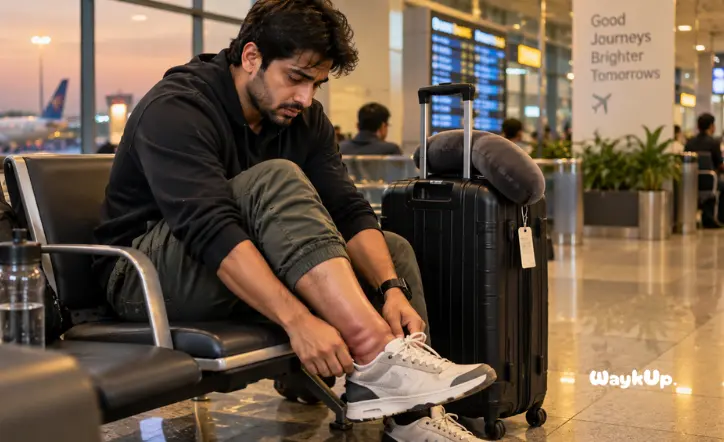
You land in Mumbai after an 8 hour flight from Dubai, and your shoes suddenly feel two sizes too small. Your ankles look puffy, almost unrecognisable. This is not rare. It happens to thousands of Indian flyers daily, especially on long routes to the Gulf, Europe, or the US.
This guide covers why your feet swell after flights, what is normal versus what needs medical attention, and fixes that actually work, not just generic “drink water” advice.
Why Feet Swell After Long Flights
Your body is not built to sit still for 6, 8, or 14 hours. With your feet on the floor, blood has to fight gravity to reach your heart. Your calf muscles normally help by contracting every time you walk, acting like a pump for your veins.
On a flight, that pump barely works. Blood starts to pool in your lower legs and feet.
Three things make this worse in the air:
- Cabin pressure. Aircraft cabins are pressurised to the equivalent of 6,000 to 8,000 feet altitude, not sea level. This lower pressure can push fluid out of your blood vessels and into surrounding tissue.
- Dry air. Cabin humidity often drops below 20 percent. Your body reacts by retaining more fluid, which shows up as puffiness in your extremities.
- Immobility. Sitting with bent knees for hours increases pressure in the leg veins, the single biggest driver of swelling.
This combination is why even fit, healthy travellers land with tight shoes. It is a plumbing problem, not a health scare, in most cases.
Common Causes of Swollen Ankles and Feet (Beyond Flying)
Flights are not the only trigger. If your feet or ankles swell even without travel, one of these could be behind it.
Standing or Sitting Too Long
Long desk hours, or retail and factory jobs that involve standing a full shift, cause the same gravity pooling as a flight. Delivery riders and shop staff in Indian cities often notice this by evening.
Heat and Humidity
Indian summers push a lot of people into swelling territory. Heat dilates your blood vessels, letting more fluid leak into surrounding tissue. This is why swollen feet complaints spike every year between April and June, especially in cities like Delhi, Lucknow, and Ahmedabad.
High Salt Diet
A meal loaded with salt, think restaurant curries, papad, pickle, and packaged snacks, makes your body hold on to extra water. This often settles in your feet and ankles by the end of the day.
Pregnancy
Swelling in the feet and ankles is common in the second and third trimester, due to higher blood volume and pressure from the growing uterus on leg veins.
Medication Side Effects
Certain blood pressure medicines, steroids, and some diabetes drugs list ankle swelling as a known side effect. If swelling started right after a new prescription, mention it to your doctor.
Underlying Health Conditions
Kidney issues, liver problems, heart conditions, and vein disorders can all cause fluid retention in the lower body. These usually come with other symptoms too, covered in the red flags section below.
Swollen Left Foot and Ankle Only: Should You Worry
This is one of the most searched questions on this topic, for good reason. Swelling in both feet is usually just gravity and fluid, the kind of thing that comes with flights, heat, or a salty dinner.
Swelling in only one foot or ankle points to something localised, not a whole-body fluid issue. Common one-sided causes include:
- A sprain or minor injury you may not remember happening
- A vein problem in that specific leg
- An infection or insect bite causing localised inflammation
- In rare but serious cases, a blood clot (deep vein thrombosis)
If your left foot and ankle are swollen but the right one is completely normal, and there was no flight or long sitting involved, do not wait it out. Get it checked, particularly if there is pain, warmth, or redness in that leg. One-sided swelling with pain is one of the classic signs doctors watch for with DVT.
The Indian Flyer’s Blind Spot Nobody Talks About
Here is something most swelling articles skip entirely: the footwear switch problem.
A large number of Indian travellers change into juttis, mojaris, or tight formal shoes right before landing, heading straight from the airport to a wedding, a meeting, or a family function. This is almost the worst possible timing.
Your feet are at their most swollen in the last hour of a long flight. Cramming them into snug juttis or leather formals at exactly that moment traps the swelling and cuts circulation further. By the time you reach the mandap or the boardroom, your feet are throbbing, not because of the flight, but because of when you switched shoes.
The fix, one you will not find in most Western travel blogs: carry your event footwear separately and change into it only after 20 to 30 minutes of walking post-landing, once fluid has redistributed. Wear roomy slip-ons for the flight itself, not the shoes you plan to wear at the event.
This one change, delaying the footwear switch by half an hour, solves a problem thousands of wedding season flyers deal with every year without realising the cause.
Quick Fixes That Actually Work
During the Flight
- Move every hour. Get up and walk the aisle if you can, even a two minute walk helps restart circulation.
- Do seated ankle rolls. Flex your foot up and down, rotate your ankle in circles, every 30 minutes.
- Skip the salty in-flight snacks and alcohol. Both push your body toward retaining more water.
- Stay hydrated with plain water. Not sugary juices or aerated drinks. Not sure if you are drinking enough? Here are the signs your body needs more hydration.
- Loosen your shoes the moment you sit down, before the swelling starts, not after.
- Avoid crossing your legs. It restricts blood flow further in an already compromised position.
After Landing
- Elevate your feet above heart level for 15 to 20 minutes once you get home. Prop them on a pillow or the arm of a sofa.
- Walk it out. A short walk after landing, even to baggage claim and the parking lot, helps drain fluid faster than sitting in a cab immediately.
- Try compression socks. These are now easily available on Amazon India and at pharmacy chains like Apollo and MedPlus, and they make a visible difference on flights over 4 hours.
- Soak your feet. Warm water with a spoon of rock salt (sendha namak) for 10 minutes is a common home remedy across Indian households, and it genuinely helps with circulation and comfort, even if it is not a medical cure.
- Cut down salt for the next meal. Skip the airport lounge namkeen and go for fruit or a light meal instead.
When Swelling Is a Red Flag
Most post-flight swelling settles within 24 to 48 hours on its own. See a doctor without delay if you notice any of the following:
- Swelling in only one leg, especially with pain or warmth
- Swelling that does not improve after two days of rest and elevation
- Chest pain, breathlessness, or a rapid heartbeat alongside leg swelling
- Skin over the swollen area turning red, shiny, or unusually warm to touch
- A history of blood clots, recent surgery, or cancer treatment, which raises your baseline DVT risk on long flights
Mayo Clinic notes that DVT risk on flights rises noticeably on journeys over 12 hours. If your doctor suspects a clot, they may recommend imaging. Here is a full guide to MRI scans in India, including cost and what to expect.
FAQs
1. Why do my feet swell more on flights than during a normal long car ride?
Cabin pressure and low humidity add to the effect of sitting still, which a car ride does not have. That is why flight swelling often feels more pronounced than a similar-length road trip.
2. Is it normal for feet to stay swollen for a day after landing?
Mild swelling that lasts up to 24 to 48 hours is generally normal, especially after flights over 6 hours. If it persists beyond that or worsens, get it checked.
3. Do compression socks really help, or are they a marketing gimmick?
They genuinely help by supporting vein function and improving blood return to the heart. Doctors recommend them for flights over 4 hours, particularly for people with a family history of vein issues.
4. Why is only my left foot swollen and not the right one?
One-sided swelling usually points to something localised to that leg, such as a minor injury, a vein issue, or in rare cases a blood clot. It is worth getting checked if it does not resolve in a day or two, or if there is pain.
5. Can drinking more water actually reduce swelling?
Yes, in a roundabout way. Staying hydrated helps your kidneys flush excess sodium and reduces your body’s tendency to retain water, which lowers swelling over time.
6.Should I be worried about swelling if I have diabetes or high blood pressure?
You should pay closer attention, since both conditions increase your baseline risk of circulation issues and can make swelling more frequent or severe. Regular monitoring and mentioning it to your doctor during check-ups is a good habit.