















 Follow Us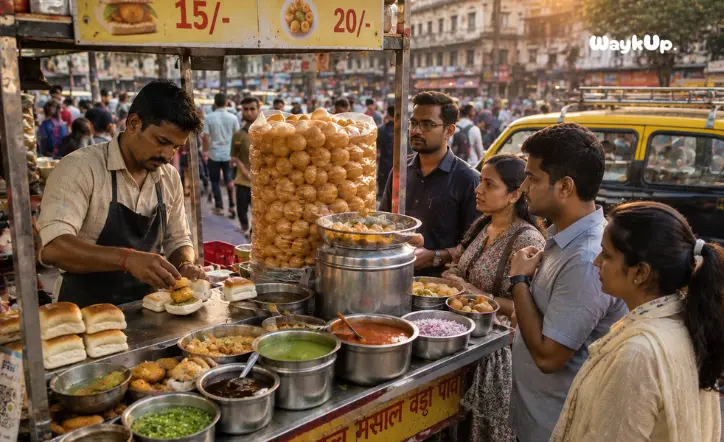
Ask anyone who grew up eating street foods in Mumbai and they will tell you the same thing. It is less about the food itself and more about the whole scene around it, the sound of a tawa sizzling on a handcart, the smell of chutney being mixed, and the queue of people who somehow all seem to know exactly what they want to order without even glancing at the menu board. Mumbai does not really have a food scene so much as it has a food culture that spills onto every footpath, railway platform, and beach.
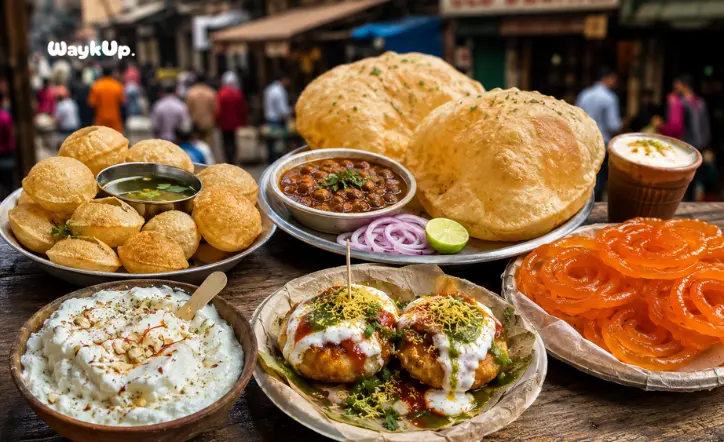
If you are planning a trip or simply want to know what to hunt down the next time you are in the city, here are five dishes that genuinely deserve the hype, along with a sense of where and how to eat them properly.
1. Vada Pav: Mumbai’s Original Fast Food
Vada pav is often called Mumbai’s answer to the burger, and honestly, that comparison undersells it. A spiced, mashed potato mixture is shaped into a patty, dipped in gram flour batter, deep fried until golden, and stuffed into a soft white pav along with a mix of chutneys and sometimes a fried green chili on the side.
What separates a great vada pav from an average one usually comes down to the chutneys and how fresh the vada is fried. Dadar is home to some of the most talked about stalls in the city, where the vada comes out piping hot and the bun still has a bit of steam trapped inside. A good vada pav should cost you somewhere between 15 and 30 rupees depending on where you are, which is part of why it remains the go to snack for students and office workers across the city.
2. Bhelpuri: Crunchy, Tangy, and Impossible to Stop Eating
Bhelpuri is proof that simple ingredients, handled right, can be more addictive than anything complicated. Puffed rice, sev, chopped onions, tomatoes, and a mix of tamarind and mint chutneys come together into something crunchy, tangy, and just sweet enough to keep you reaching for more.
This is a dish best eaten near the water. Girgaum Chowpatty and Juhu Beach are the classic settings, where vendors mix each portion fresh in a large steel bowl right in front of you. It is worth watching them make it once, since the ratio of chutney to puffed rice is what separates a soggy plate from a genuinely great one.
3. Sev Puri: The Chaat That Rewards Patience
Sev puri belongs to the same chaat family as bhelpuri, but it plays by different rules. Instead of everything mixed together, flat crisp puris are topped individually with mashed potato, onions, a trio of sauces, sev, and often a scattering of raw mango.
The trick with sev puri is timing. Eat it too slowly and the puris go soft, eat it right away and you get that satisfying crack before the flavors hit all at once. Vendors near Juhu and several lanes in the suburbs are known for versions where the chutneys are balanced just right, not too sweet and not overwhelmingly spicy.
4. Pav Bhaji: Comfort Food That Started as a Workers’ Meal
Pav bhaji has one of the more interesting backstories among Mumbai street foods. It is widely believed to have originated as a quick, filling meal for textile mill workers who needed something substantial during short breaks. Vegetables, mostly potatoes, tomatoes, and peas, are mashed together with a generous amount of butter and pav bhaji masala, then served with soft buttered pav on the side.
This is less a snack and more a proper meal, and it shows in how it is eaten. Areas like Tardeo and several stretches near Chowpatty have stalls that have been serving pav bhaji for decades, with regulars who order the exact same thing every single time. The extra butter is not optional, it is the whole point.
5. Pani Puri: The One-Bite Wonder
No list of street foods in Mumbai would be complete without pani puri, even though outside Mumbai it goes by different names in different states. A small, crisp puri is cracked open just enough to stuff in potato, chickpeas, and spices, then dunked into a bowl of tangy, spiced water before it goes straight into your mouth.
The whole experience only works if you eat it the moment it is handed to you, since the puri needs to stay crisp. Good vendors, especially around Chowpatty, are particular about using filtered water, which is worth asking about if you are trying it for the first time in an unfamiliar area. Pani puri is also one of the cheapest street foods you will find, often just a handful of rupees for a full plate.
Making the Most of a Mumbai Street Food Crawl
Say you have just landed in Mumbai for a two day work trip and have exactly one free evening. Here is a simple approach that covers most of what makes the city’s street food special without wasting time.
- Head to Chowpatty or Juhu Beach in the early evening, when the crowd builds up and the vendors are working at full speed.
- Start light with bhelpuri or sev puri, then move to something heavier like pav bhaji once you have worked up an appetite.
- Save pani puri for last, since it disappears the fastest and is best enjoyed standing right at the stall.
- Carry small change. Most vendors deal in cash and exact amounts speed things up considerably.
- If you have a sensitive stomach, stick to stalls with visible turnover and avoid raw tap water in anything you are served.
None of this needs to be planned like a itinerary. Half the fun of Mumbai street food is wandering until something smells too good to walk past.
If you enjoyed this and want to compare notes with another city’s food scene, our guide to the best food in Delhi covers a similarly loaded lineup of must-try dishes. For more city food guides and general dining recommendations, browse our full Food & Culture section, and if you are planning the rest of your Mumbai trip beyond just eating, our Trip & Travel section has more on getting around Indian cities. We are also working on a dedicated guide to Mumbai’s best chaat stalls by neighbourhood, so keep an eye out for that soon.
FAQs
Q. What is the most famous street food in Mumbai?
Vada pav is widely considered Mumbai’s most iconic street food. It is affordable, available almost everywhere in the city, and often described as Mumbai’s version of a burger, made with a spiced potato patty stuffed into a soft pav.
Q. Is Mumbai street food safe to eat?
Generally yes, especially at busy stalls with high turnover, since food does not sit around for long. Stick to vendors using visibly clean setups, avoid raw tap water, and go where you see plenty of local customers already eating.
Q. Where is the best place in Mumbai to try street food?
Girgaum Chowpatty and Juhu Beach are among the most popular spots, especially for chaat items like bhelpuri, sev puri, and pani puri. Dadar and Tardeo are also well known for vada pav and pav bhaji respectively.
Q. How much does Mumbai street food usually cost?
Most street food in Mumbai is very affordable, with items like vada pav and pani puri often costing between 15 and 50 rupees per serving. A heavier dish like pav bhaji may cost slightly more depending on the stall.
Q. Is Mumbai street food mostly vegetarian?
A large portion of the well known Mumbai street food, including everything on this list, is vegetarian. That said, the city also has plenty of non-vegetarian street food options like kebabs and rolls in certain neighbourhoods.