

















 Follow Us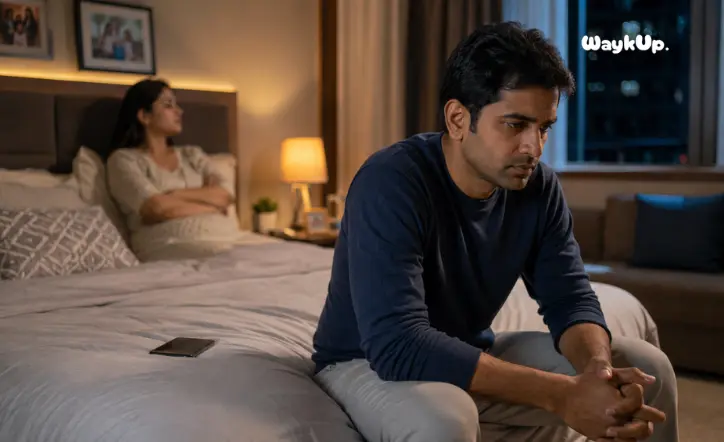
Marriage is often imagined as the point where loneliness ends. You have a partner, someone to come home to, someone who knows your routine and someone who is supposed to be there through the difficult days. Yet some men feel lonely after marriage, even when they are surrounded by their wife, children and family. The feeling can be difficult to explain because, from the outside, everything may appear perfectly normal.
A man may go to work, come home, spend time with his family and participate in everyday responsibilities, but still feel that he has nobody with whom he can openly discuss what is happening inside his mind. This kind of loneliness is not necessarily about a lack of love. It can be about a lack of emotional connection, personal space, friendship and the freedom to admit that something is not okay.
Why Do Some Men Feel Lonely After Marriage?
Marriage changes more than a person’s relationship status. It changes routines, priorities, friendships and responsibilities. For some men, the transition happens gradually. Weekend plans become family plans, old friends become harder to meet, hobbies get pushed aside and conversations at home increasingly revolve around practical matters.
There is nothing wrong with discussing bills, children’s education, work schedules or household responsibilities. These conversations are part of building a life together. The problem begins when they become almost the only conversations a couple has.
A man can be talking to his wife every day and still feel emotionally unheard.
When Your Spouse Becomes Your Only Emotional Connection
One common reason behind emotional loneliness in marriage is having only one person to depend on for emotional support.
Before marriage, a man may have had several people in his life who provided different kinds of companionship. There could have been a close college friend for personal conversations, a group for weekend outings and perhaps a sibling or cousin he could call whenever something went wrong.
Marriage does not necessarily remove these relationships, but maintaining them can become harder. Work, family responsibilities and changing priorities slowly create distance.
Eventually, the husband may depend almost entirely on his wife for emotional companionship. That can put pressure on the relationship because no single person can realistically fulfil every social and emotional need.
A healthy marriage can coexist with meaningful friendships, hobbies and individual interests.
Men Are Often Expected to Be Strong
For many men, expressing vulnerability does not come naturally. From an early age, some are encouraged to be independent, control their emotions and solve problems without asking for help.
That attitude can work for practical problems. It becomes difficult when the problem is emotional.
A man who is worried about his career might simply say, “Work is stressful.” A man who feels disconnected from his partner might say, “I’m just tired.” Someone struggling with insecurity may not say anything at all.
Research into men’s loneliness and social connection has found that traditional expectations around masculinity can make emotional disclosure, vulnerability and seeking support more difficult.
This can create a strange situation. A man may desperately want someone to ask how he is doing, while simultaneously making it difficult for anyone to see that he needs support.
Providing for the Family Can Become His Entire Identity
Marriage often brings financial and family responsibilities that can consume a large part of a man’s attention.
There is the EMI, rent, children’s education, savings, insurance, household expenses, parents’ needs and career pressure. In many families, the husband also feels an expectation to remain financially stable even when his own circumstances are uncertain.
Over time, being the person who “handles everything” can become part of his identity.
He becomes the provider. The problem-solver. The person everyone calls when something needs to be fixed.
But being needed is not the same as being emotionally understood.
A man can feel proud of taking care of his family while simultaneously wishing somebody would ask about his fears, ambitions or disappointments.
Friendships Often Get Lost Somewhere Between Work and Family
One of the biggest changes after marriage can be the gradual disappearance of old friendships.
It rarely happens overnight. Nobody announces that the friendship is over. Instead, plans keep getting postponed.
One friend gets married. Another changes cities. Someone has a child. Work becomes demanding. Weekend football becomes occasional football, and eventually even the occasional game disappears.
Months later, a man may realise that he has plenty of contacts but very few people he can genuinely call.
This distinction matters. Having hundreds of people on social media does not necessarily mean having someone you can call at midnight when life feels overwhelming.
The World Health Organization describes loneliness as the distress associated with feeling that meaningful social connection is insufficient. It also distinguishes loneliness from simply being physically alone.
That is why maintaining friendships after marriage is not a sign of being less committed to the family. It can actually contribute to a healthier emotional life.
A Marriage Can Be Full of Conversation Yet Lacking Connection
This is perhaps the easiest form of loneliness to overlook.
A couple may speak throughout the day but rarely have a meaningful emotional conversation.
“Can you pick up the groceries?”
“What time are you coming?”
“Did you pay the electricity bill?”
“The kids have school tomorrow.”
These conversations are necessary. But they do not necessarily create intimacy.
Emotional connection requires conversations about things that cannot be solved with a payment, appointment or task.
A husband might need to say, “I don’t feel like myself lately.” He may want to talk about a career decision, an old insecurity or something he is afraid of losing.
WayKUp’s article on the five love languages for a healthy marriage looks at how couples can express affection differently and why people can love each other while still failing to make each other feel understood.
Sometimes the issue is not the absence of love.
It is the absence of the right kind of communication.
Men Can Carry Problems They Never Talk About
A person does not always need to be going through a major crisis to feel lonely.
Sometimes it is a collection of smaller pressures.
Career uncertainty. Money worries. Family expectations. Parenting concerns. Workplace competition. Fear of failure. Feeling stuck. Comparing yourself with friends who appear to be doing better.
These things can quietly build up.
A man may still laugh at dinner, play with his children and attend family functions while carrying a completely different emotional experience internally.
This is where social media can make things worse. A former classmate appears to have bought a house. Another friend posts pictures from an expensive holiday. Someone else announces a promotion. Another couple appears to have the perfect marriage.
The comparison happens silently.
WayKUp’s guide to self-love also touches on self-worth, comparison and external validation, which can influence how people see themselves and their relationships.
The important thing to remember is that social media shows selected moments, not the complete story behind them.
Losing Personal Identity Can Make Loneliness Stronger
Marriage should add a relationship to your identity, not replace your entire identity.
Before marriage, a man might have had hobbies, friends, ambitions and routines that existed independently of his relationship. After marriage, those things can slowly disappear under the weight of responsibility.
He stops playing guitar because there is no time.
He stops meeting friends because weekends belong to the family.
He stops travelling because saving money becomes more important.
He stops talking about personal ambitions because they feel less practical now.
None of these decisions is necessarily wrong. The problem is what happens when there is nothing left that belongs to him.
A healthy relationship needs togetherness, but it also needs individuality. Personal interests and friendships give people experiences to bring back into the relationship.
A Simple Real-Life Scenario
Imagine a married man in his mid-30s working a demanding corporate job. He leaves home in the morning, spends most of the day dealing with deadlines and returns home mentally exhausted. His wife also has her own responsibilities, and their evenings are usually spent managing dinner, household tasks and their child’s routine.
They love each other. There is no major fight or obvious problem.
One evening, his wife asks, “How was your day?”
He says, “Fine.”
She asks again, “Everything okay?”
He replies, “Just tired.”
But what he really wants to say is that he feels stuck at work, has not spoken properly to his closest friend in months and misses the person he used to be before every weekend became about responsibilities.
Nothing dramatic has happened.
That is precisely why the loneliness is easy to miss.
What Can Men Do When They Feel Lonely After Marriage?
The first step is recognising that loneliness does not automatically mean the marriage has failed.
Start by rebuilding the parts of life that may have disappeared.
Reconnect with one friend. Instead of waiting for the perfect weekend, make a short phone call or meet for tea.
Talk honestly with your partner. Saying “I feel lonely” can sound like an accusation if it is delivered during an argument. A calmer approach is to explain what you are missing and what kind of connection you would like.
Protect some personal time. Exercise, reading, music, gaming, sports or another hobby can give you a sense of identity outside work and family responsibilities.
Create conversations that are not about logistics. Put the phones away and spend some time discussing how each of you is actually doing.
Ask for professional support when necessary. Persistent loneliness accompanied by prolonged sadness, hopelessness, anxiety or difficulty functioning deserves proper attention. Loneliness is not itself a mental-health diagnosis, but sustained social isolation can affect overall well-being.
WayKUp’s mental health and well-being guide also covers practical ways of supporting emotional well-being through social connection, physical activity, hobbies and professional help when appropriate.
What Can Partners Do?
If your husband says he feels lonely, the first response does not have to be, “But we are together all the time.”
That may be factually true, but it does not address what he is trying to communicate.
A better starting point is a simple question: “What have you been missing?”
At the same time, men should not expect their partners to automatically understand feelings that they never express. Emotional closeness requires participation from both people.
Set aside some time without television or phones. Take a walk together. Have tea after dinner. Talk about something other than money, children and household responsibilities.
Small conversations can become meaningful when they happen consistently.
If communication has turned into constant criticism, resentment or emotional withdrawal, it may be useful to understand the difference between normal relationship struggles and unhealthy patterns. WayKUp’s guide to signs of a toxic relationship provides a useful starting point.
Being Married Does Not Make Loneliness Impossible
The idea that a married man should never feel lonely creates another problem: shame.
If he admits that he feels alone, he may worry that people will assume he does not love his wife or appreciate his family. That fear can push him further into silence.
But loneliness is not always about the number of people around you. It is about whether you feel connected to them.
A man can love his wife and still need close friends. He can enjoy being a father and still need time for himself. He can be grateful for his family and still have days when he feels lost.
Marriage works best when two people build a life together without completely losing the individuals they were before they met.
Sometimes the solution to feeling lonely after marriage is not to find another person.
It is to start talking honestly to the people already in your life.
Frequently Asked Questions
1. Why do men feel lonely after marriage?
Men can feel lonely after marriage when friendships become less frequent, personal interests disappear and emotional conversations with their partner become limited. Social expectations around being strong and independent can also make it harder to ask for emotional support.
2. Can a man be lonely even if he loves his wife?
Yes. Loving a spouse and experiencing loneliness can happen at the same time. A man may have a loving marriage but still miss close friendships, personal independence, emotional conversations or a stronger sense of connection with himself.
3. Is feeling lonely after marriage a sign of an unhappy marriage?
Not necessarily. Loneliness can come from work stress, lost friendships, lack of personal time or difficulty expressing emotions. However, persistent emotional distance between partners should not be ignored and is worth discussing openly.
4. How can a married man deal with loneliness?
He can reconnect with friends, maintain personal hobbies, communicate honestly with his partner and create regular time for meaningful conversations. If loneliness becomes persistent or seriously affects daily life, speaking with a qualified mental-health professional can also help.
5. How can a wife help if her husband feels emotionally lonely?
Listen without immediately becoming defensive or trying to solve the problem. Ask what he feels is missing and give him space to explain. Encouraging friendships, hobbies and honest communication can also help create a broader emotional support system.
6. Can marriage make loneliness worse?
For some people, marriage can unintentionally reduce friendships, personal time and independence. When most emotional and social needs are placed on one relationship, loneliness can become more noticeable if that relationship lacks open communication or emotional intimacy.